
Last updated November 15, 2026
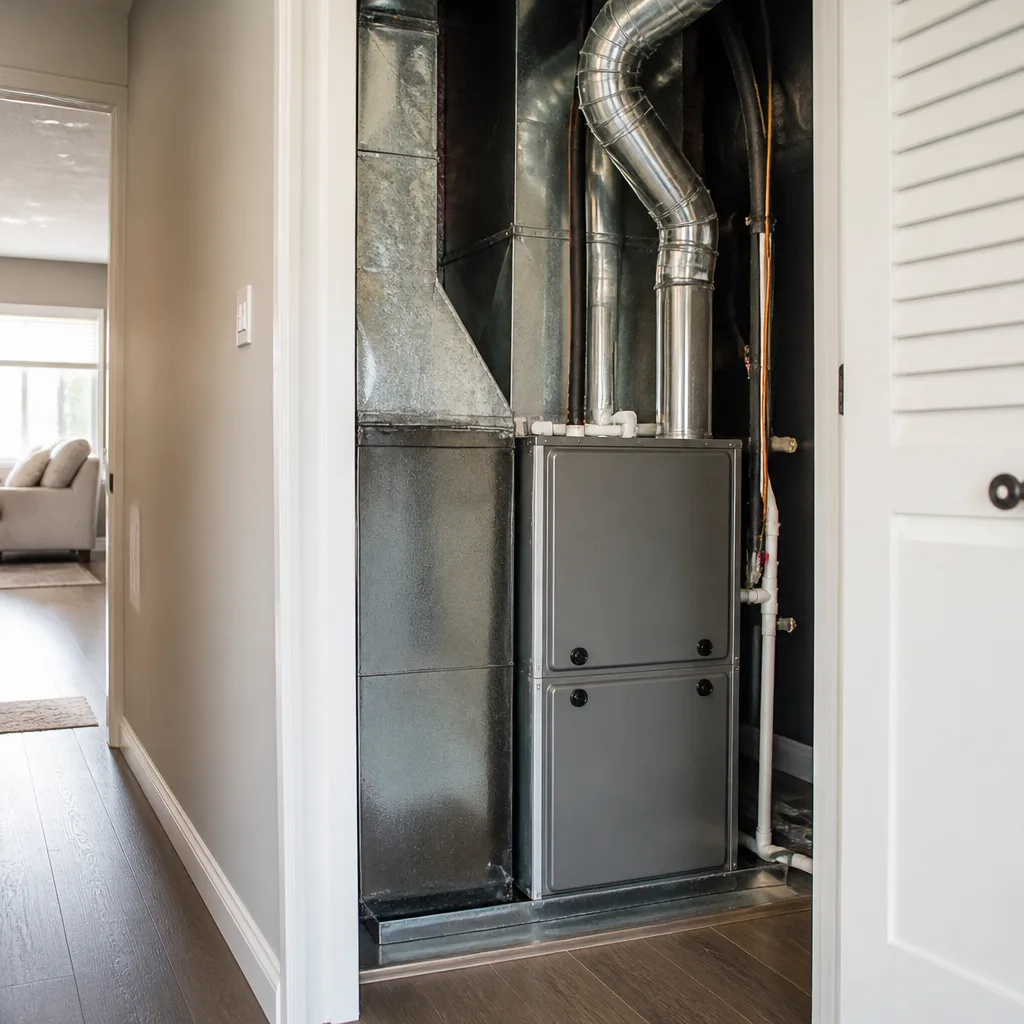 Furnace & heating
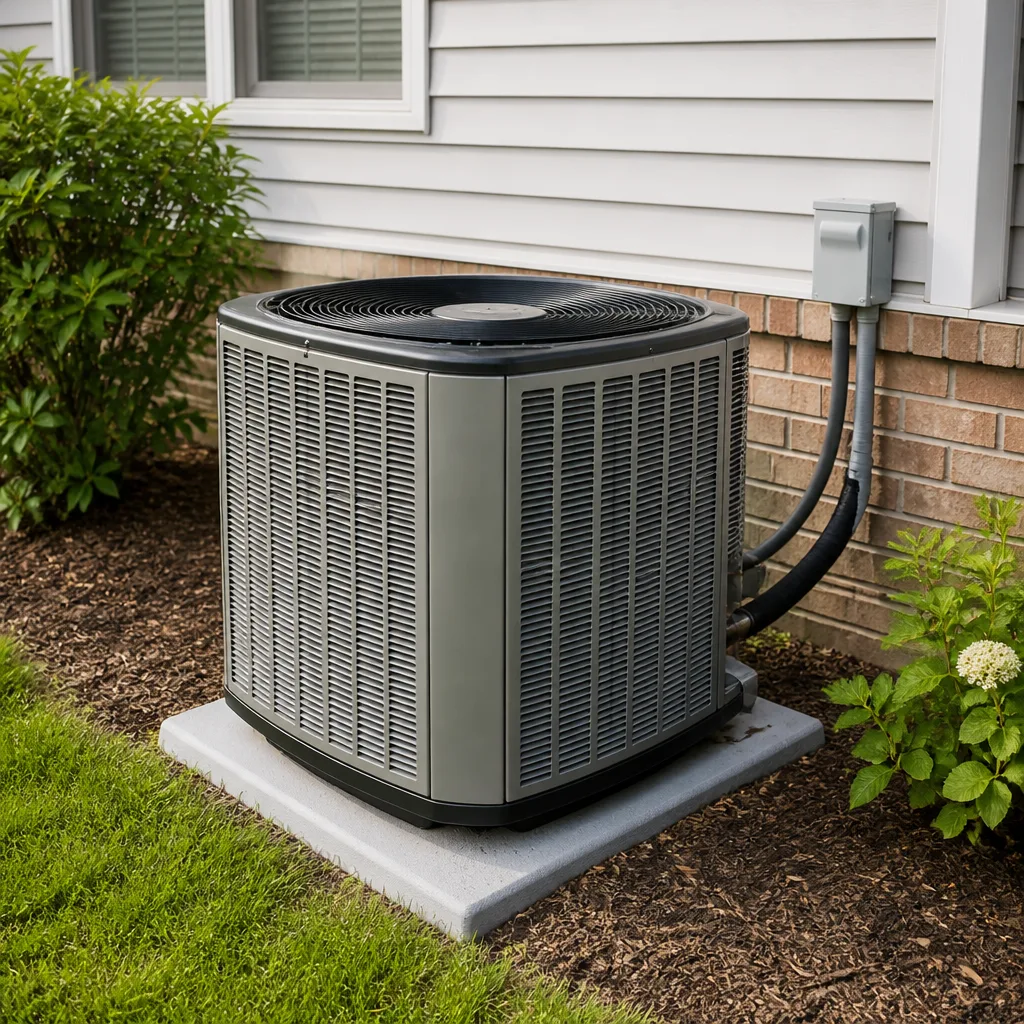 AC repair
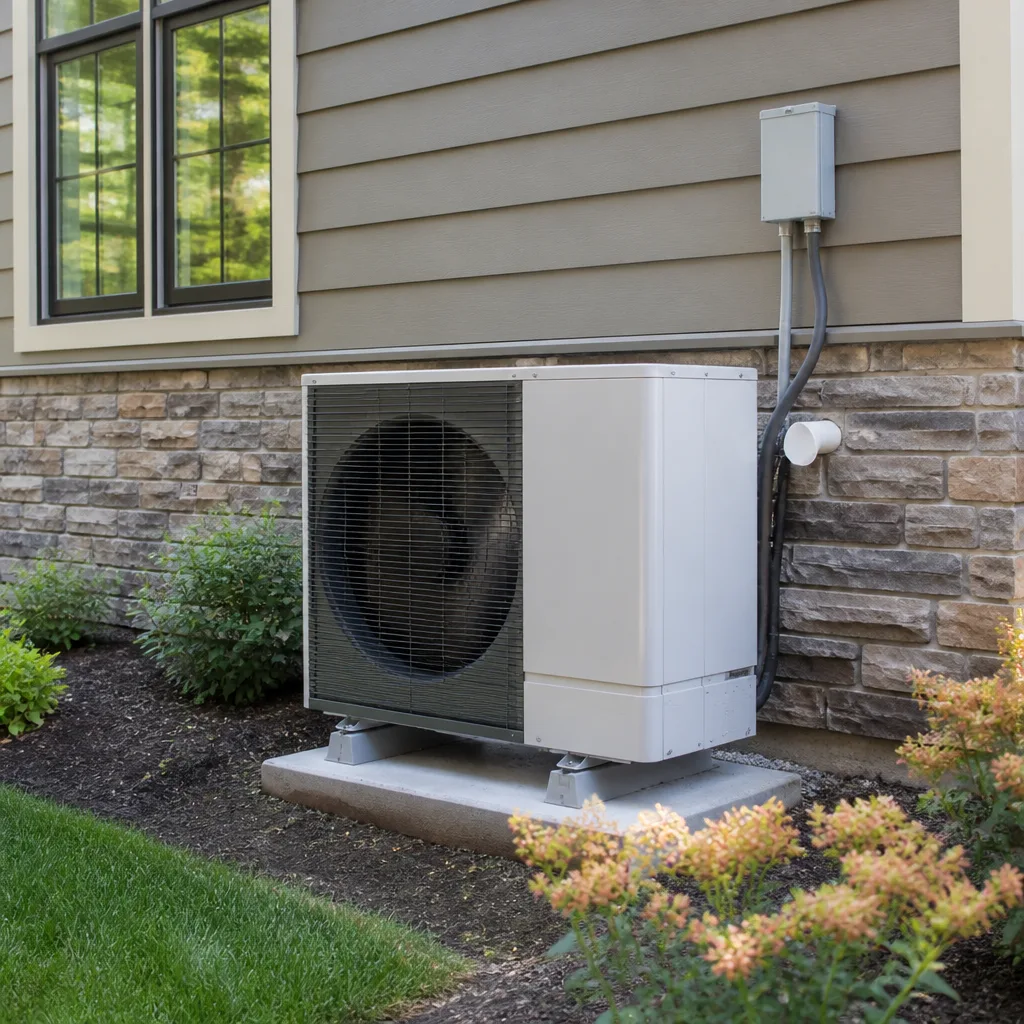 Heat pumps
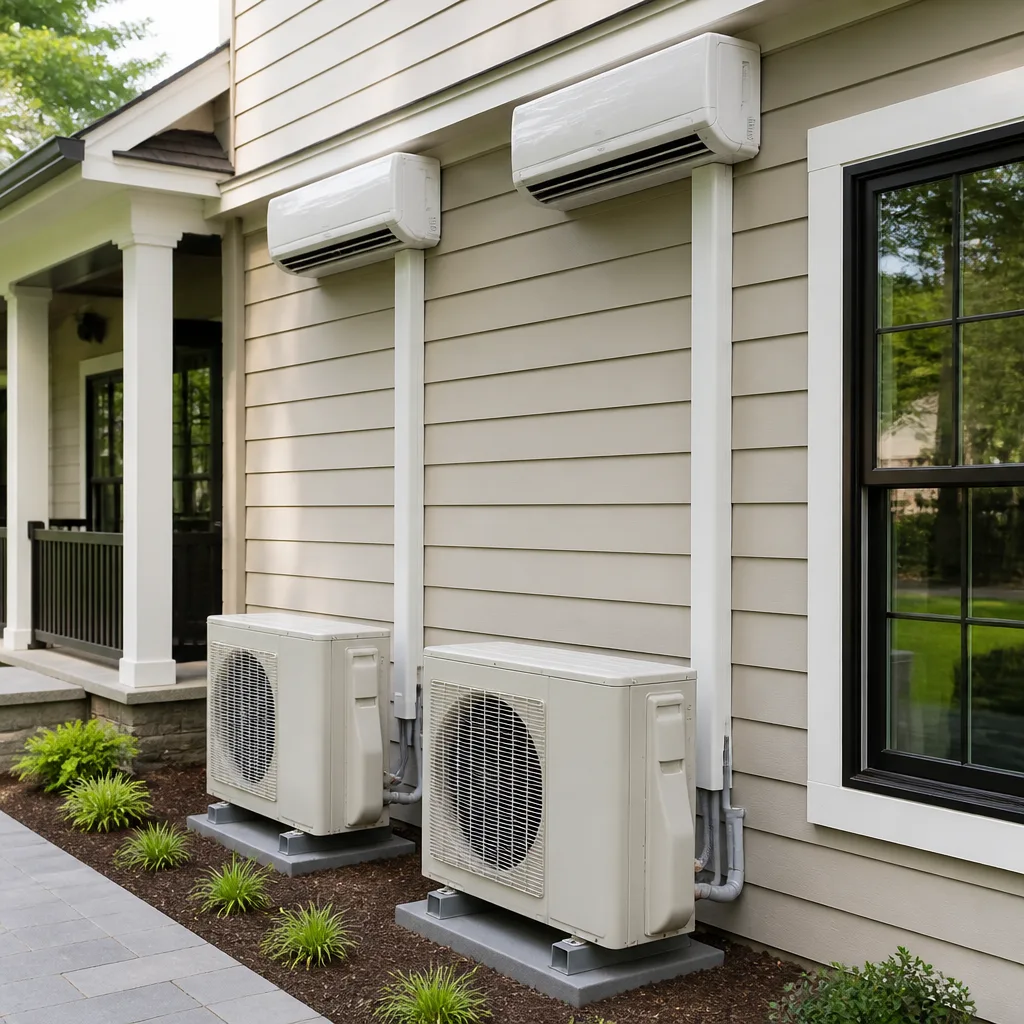 Ductless mini splits
 Carrier
 Trane
 Goodman
Seasonal tune-up and full diagnostic on your Carrier, Trane, or Goodman system - readings shown to you before any repair is proposed
Diagnosis first, numbers second - you approve the repair price before a single part goes in.
Get your free estimateFurnace Replacement Troubleshooting in Gainesville: Common Problems and How to Fix Them
Most homeowners who call us about a “dead furnace” in Gainesville have already decided it needs to be replaced. Usually it doesn’t. The diagnosis that gets thrown around most often, a cracked heat exchanger, is real and serious, but it’s also the easiest one to claim without proof, and it’s frequently the excuse that pushes a homeowner into a five-figure replacement they didn’t need. What you actually need is a way to read your own system’s symptoms before anyone knocks on your door. This guide walks through the failure patterns that mean a component is done, the ones that mean the whole unit is done, and how to tell which one you’re looking at.
Quick Answer
In most cases, a furnace that won’t heat in Gainesville is a fixable repair, not a replacement: failed igniters, flame sensors, pressure switches, and intermittent ignition faults are the usual culprits, and they’re component swaps. Replacement is genuinely the right call when the heat exchanger is confirmed cracked with documented evidence, when the unit is old and the repair cost approaches half the price of a new system, or when repeated failures point to a failing core. Get a written diagnosis with photos before you agree to anything.
Styles & brands we work with
- AC repair
- Furnace & heating
- Heat pumps
- Ductless mini splits
- Carrier
- Trane
- Goodman
Table of Contents
- What Your Furnace Is Telling You: Symptoms That Point to Component Failure
- Intermittent Ignition Failures in Florida Humidity
- Error Codes by Brand: Carrier, Trane, Rheem, and York
- How to Verify a Cracked Heat Exchanger Claim
- The 50% Rule, Applied Honestly
- When the Furnace Fails During a Gainesville Cold Snap
- Repair or Replace: The Decision Framework
- Common Mistakes to Avoid
What Your Furnace Is Telling You: Symptoms That Point to Component Failure
A furnace that fails in a predictable, repeatable way is usually telling you a specific part is bad. A furnace that fails in changing, escalating ways is usually telling you the system is tired. Learning to sort those two categories is half the work of deciding whether you’re looking at furnace repair or a full replacement.
Here’s how the symptoms split out in practice on the brands we see most in Gainesville homes: Carrier, Trane, Rheem, and York among them.
Symptoms that usually mean a repairable component
- Short cycling (furnace runs a few minutes, shuts off, repeats) often points to a failing flame sensor or a dirty sensor probe. Cleaning or replacing the sensor is a small job.
- Clicking at startup with no ignition is commonly a weak igniter or a control board that isn’t sending the signal.
- Blower runs, no heat frequently means the gas valve isn’t opening, the igniter has failed, or a safety switch has tripped.
- Diagnostic LED flashing a code is a gift, not a problem. The board is telling you the exact fault, and a technician reads it in seconds.
- Heat that works on some calls but not others points to a marginal component or a draft/venting issue, both of which are usually fixable.
Symptoms that raise replacement concern
- A confirmed heat exchanger crack (see the section below for verification).
- Repeated igniter or pressure switch failures within a short span, which can signal the system is running outside its design parameters.
- Combustion smell, soot at the burners, or a flame that burns mostly yellow instead of mostly blue. These are safety signals; shut the system down and get it inspected.
- Rust or scale across the cabinet, burners, and heat exchanger, which suggests long-term moisture exposure.
Intermittent Ignition Failures in Florida Humidity
The pattern we see constantly in Gainesville: a furnace fires normally on Monday, fails to light on Wednesday, then works again for a week. Homeowners assume this is the last gasping sign of a dying system. It usually isn’t. Intermittent ignition is one of the most common repairable faults we diagnose, and the cause often traces back to the humidity and coastal-adjacent air that runs through North Central Florida for most of the year.
Why humidity matters: the igniter sits in a combustion environment, and a dirty or marginally worn igniter can’t heat past the moisture film that builds up between cycles. The flame sensor also reads “flame present” through ionization, and a dirty sensor can’t distinguish properly when air is humid or when airflow shifts. Both are cheap parts and neither requires a new furnace.
What typically causes intermittent ignition
- Dirty or worn flame sensor. The single most common cause. Cleaned or replaced in most visits.
- Weak hot-surface igniter. It glows but doesn’t get hot enough to light the gas on a humid morning. Replacement is the answer.
- Pressure switch sticking. Venting and condensate can interfere with the switch reading, especially on condensing furnaces.
- Dirty burners or restricted gas flow. Less common, but a legitimate cause on a system that hasn’t been serviced in years.
- Loose wire or failing control board connection. A loose terminal at the igniter or sensor can cause the fault to move around.
If you’re seeing three or more no-heat days in a single heating season and the fault pattern is the same each time, start with repair. Replacement is the wrong first move on a unit that lights reliably when a technician is standing there.
Error Codes by Brand: Carrier, Trane, Rheem, and York
Error codes are your early warning system, and most homeowners ignore them until the house gets cold. On the brands we work on most often in Gainesville, the codes are specific enough that a technician can almost always predict the diagnosis from the code alone. Here’s what those codes generally point to in the field.
Carrier and Bryant
Carrier and Bryant control boards use LED flash patterns. A common ignition lockout presents as a repeating “1-1” (or “lockout”) sequence. A pressure switch fault shows as a “3-1” or “3-2” pattern. Persistent flame-loss codes often trace to the flame sensor. If you see the same code three visits in a row after a repair, that’s a signal to review whether the underlying component is failing faster than the repair can keep up.
Trane and American Standard
Trane and American Standard boards often report faults through a blinking LED paired with a code table on the inside of the blower door. Ignition lockout and pressure switch codes dominate. On this brand family, a recurring high-limit trip code is worth noting; it can point to airflow restrictions or a failing blower, which behaves differently than a simple sensor fault.
Rheem
Rheem controls often show a two-digit fault code. A code pointing at “ignition” with a new igniter already installed suggests the control board itself is the fault. This is one of the cases where a relatively cheap board replacement saves a furnace that would otherwise be scrapped.
York
York control boards vary more by vintage, but the common faults are the same trio: ignition, pressure switch, and limit. Because York installations in Gainesville span decades of housing stock, a home built in the 1990s may still have the original board, and it may be the whole problem.
Across all four brands, the key diagnostic principle is: the code names a circuit, not a verdict. A code pointing at “ignition” doesn’t mean the furnace is dying. It means something in the ignition circuit is failing, and the job is finding which component.
How to Verify a Cracked Heat Exchanger Claim
The heat exchanger is the metal separator between combustion gases and the air you breathe. A true crack is a safety issue and a replacement trigger. It’s also the most over-claimed diagnosis in residential HVAC, and homeowners deserve to know how to check it. Fewer than 30% of homeowners we talk to know what a legitimate inspection should look like before they sign a replacement contract.
What a legitimate heat exchanger inspection includes
- Visual inspection of the accessible portions. Not every part of a heat exchanger can be seen directly; the technician should be honest about what they actually examined versus what they inferred.
- Photographic evidence. A photograph of the crack, distortion, or pinhole is standard practice and you should ask for it. “I saw a crack” without a picture isn’t a diagnosis.
- A combustion gas test. Some technicians use a combustion analyzer or a targeted test to check for carbon monoxide in the supply air. Ask whether this test was run and what the readings were.
- Written summary of the finding, in plain language, attached to the estimate. If the estimate is verbal, ask for it in writing.
Red flags in a heat exchanger diagnosis
- The technician names a cracked heat exchanger but can’t describe where the crack is or show a photo.
- No test is offered to confirm combustion gas is leaking into your home’s air.
- The recommendation is replacement before any repair option is even mentioned.
- The diagnosis is offered as part of a “free inspection” with no written documentation afterwards.
If a tech can show you a photo, describe the location, and walk you through a combustion test result, take the finding seriously. A confirmed crack is one of the few situations where replacement is clearly the right call.
The 50% Rule, Applied Honestly
The 50% rule is one of the most misused shortcuts in the trade. The honest version of it goes like this: if the cost of the repair is roughly half the cost of a full replacement, a homeowner should seriously consider replacement. The dishonest version is when contractors round up, add items that aren’t strictly necessary, and push replacement on a unit that responds to one $400 repair.
When the 50% rule actually favors replacement
- The unit is at or beyond its expected service life and the repair is in the same ballpark as half a new system.
- The heat exchanger has been confirmed cracked with documented evidence.
- Multiple major components are failing at once (control board plus inducer plus heat exchanger concern), so the repair is really a renovation.
- The repair is available, but the part lead time or dependability is a real risk given the unit’s condition.
When the 50% rule is being abused
- The repair is under a few hundred dollars, but the contractor insists on replacement because the unit “isn’t going to last forever.”
- Repair options aren’t presented at all, only replacement tiers.
- The estimate bundles optional maintenance work as if it were required.
- The recommendation happens before the diagnostic is finished.
We offer repair and replacement side by side on purpose, because the honest answer is often repair. If you’re facing a decision in Gainesville and the estimate you got only shows replacement, get a second opinion with the repair cost included. AC repair in Gainesville is the same call for us; we’d rather keep a healthy system running than push a system you don’t need.
When the Furnace Fails During a Gainesville Cold Snap
Gainesville cold snaps are short and infrequent, but when one hits and your furnace doesn’t come on, you need heat before the full diagnostic visit. Here’s the triage sequence we recommend to homeowners while waiting for a service appointment.
- Check the thermostat first. It should be set to “heat,” the set temperature should be above the room temperature, and the batteries (if onboard) should be fresh. This solves a surprising number of “furnace failure” calls.
- Check the circuit breaker for the furnace at the panel. If it’s tripped, reset it once and watch whether it trips again. A breaker that trips again is a diagnosis, not a nuisance.
- Check the gas supply. If you have other gas appliances (water heater, range), confirm they’re still getting gas. A furnace with no gas supply is a utility question, not an HVAC one.
- Check the furnace filter. A badly clogged filter can trigger a high-limit trip on some models. If it’s dark and heavy, change it.
- Check the furnace power switch. There’s often a light-switch-style toggle near the furnace. Make sure it’s on.
- Watch the startup sequence. If the igniter glows and the burner lights for a few seconds and then shuts off, that’s a flame sensor or pressure switch issue. If nothing happens at all, that’s likely the control board or igniter.
- Note the LED code on the furnace board. Write it down. This is one of the most useful pieces of information a technician can have on arrival.
If the situation is a genuine safety concern (gas smell, soot, or a burner flame that looks wrong), turn the furnace off at the switch and the breaker, then call. Do not try to diagnose further.
If it’s just cold in the house and nothing looks wrong, use a space heater in the room you’re occupying while you wait for service, and keep the thermostat set at a reasonable temperature to protect the house from any lingering nighttime cold. Call us. We answer 24/7. Fast dispatch from 7am to 7pm, Sunday through Friday. A call outside dispatch hours is booked into the next opening.
Repair or Replace: The Decision Framework
Here’s the framework we walk homeowners through in Gainesville when the diagnosis is complete and it’s genuinely unclear which direction to go. It’s not a flowchart, it’s a set of questions with honest answers.
Question 1: Is there a confirmed safety fault?
Confirmed heat exchanger crack with photographic evidence, combustion gas leaking into the supply air, soot or a flame that burns wrong. If yes, replacement is the right call. There isn’t a repair that makes this safe.
Question 2: How many components have failed in the last season?
One failed component in a season is normal wear. Two is worth watching. Three or more components on the same system within a single heating season starts to look like a furnace that’s failing across the board, and replacement math becomes honest.
Question 3: Does the repair cost land near half of a replacement?
If the repair is under half of a new system, repair usually wins. Above that, it depends on the unit’s condition and how long you plan to stay in the home.
Question 4: How is the rest of the system?
A furnace with a healthy heat exchanger and a young blower motor in an otherwise sound system is a keeper. A furnace where the core is failing is a different animal. Our technicians have up to 15 years of experience reading that difference, and they’ll tell you plainly which side of it you’re on.
What a Furnace Replacement Actually Involves in Gainesville
When replacement is the right answer, here’s roughly what the project involves in a Gainesville home, so you go in with no surprises.
- Load calculation and equipment selection. Sizing isn’t guesswork; a proper install starts with a load calculation on the home. We work on systems from Carrier, Trane, Lennox, Goodman, Rheem, York, Daikin, Bryant, and American Standard so we can match equipment to your home and your budget instead of pushing one brand.
- Written fixed price and install date. Replacement is scheduled work, not same-day. You get the price in writing and a firm install date before anything is ordered.
- Removal and disposal of the old unit. The old furnace comes out and gets hauled away.
- Installation, including venting, gas connections, and electrical. Combustion venting is code-sensitive and this is where quality installs separate themselves.
- Commissioning and test. The system is fired, combustion is tested, airflow is verified, and the thermostat is set up.
- Paperwork. Any registration, warranty, or insurance work that applies is handed to you at the end of the visit.
If you’re also considering AC installation at the same time (which makes sense on a whole-home system nearing end of life), one team can handle both rather than coordinating two contractors.
Common Mistakes to Avoid
- Accepting a cracked heat exchanger diagnosis without a photo. Ask for the picture, ask what the test showed, and don’t sign a replacement contract on a verbal finding. This is the single most expensive mistake we watch homeowners make in Gainesville.
- Replacing a furnace because the thermostat said “heat” but nothing happened. A dead thermostat, a tripped breaker, or a bad igniter will all show up as the same silent symptom. Get the diagnosis done before the decision.
- Ignoring repeated ignition lockouts because the furnace “works eventually.” Intermittent ignition is nearly always a component fault, and continued running on a failing component can damage the control board. Fix it early.
- Assuming the 50% rule is a rule at all. It’s a heuristic, not a code. A repair at 40% of replacement on a solid unit is often the right call, even if a contractor says otherwise.
- Skipping the load calculation on replacement. A furnace that’s oversized for the home short-cycles, and one that’s undersized can’t keep up. “Same size as the old one” isn’t a load calculation.
- Calling one contractor and stopping there. A second opinion that includes a repair option is worth the phone call. Any technician confident in their diagnosis will welcome it.
- Forgetting to write down the LED code before the technician arrives. That one detail can cut the diagnostic time in half and save the technician a guess.
See the difference
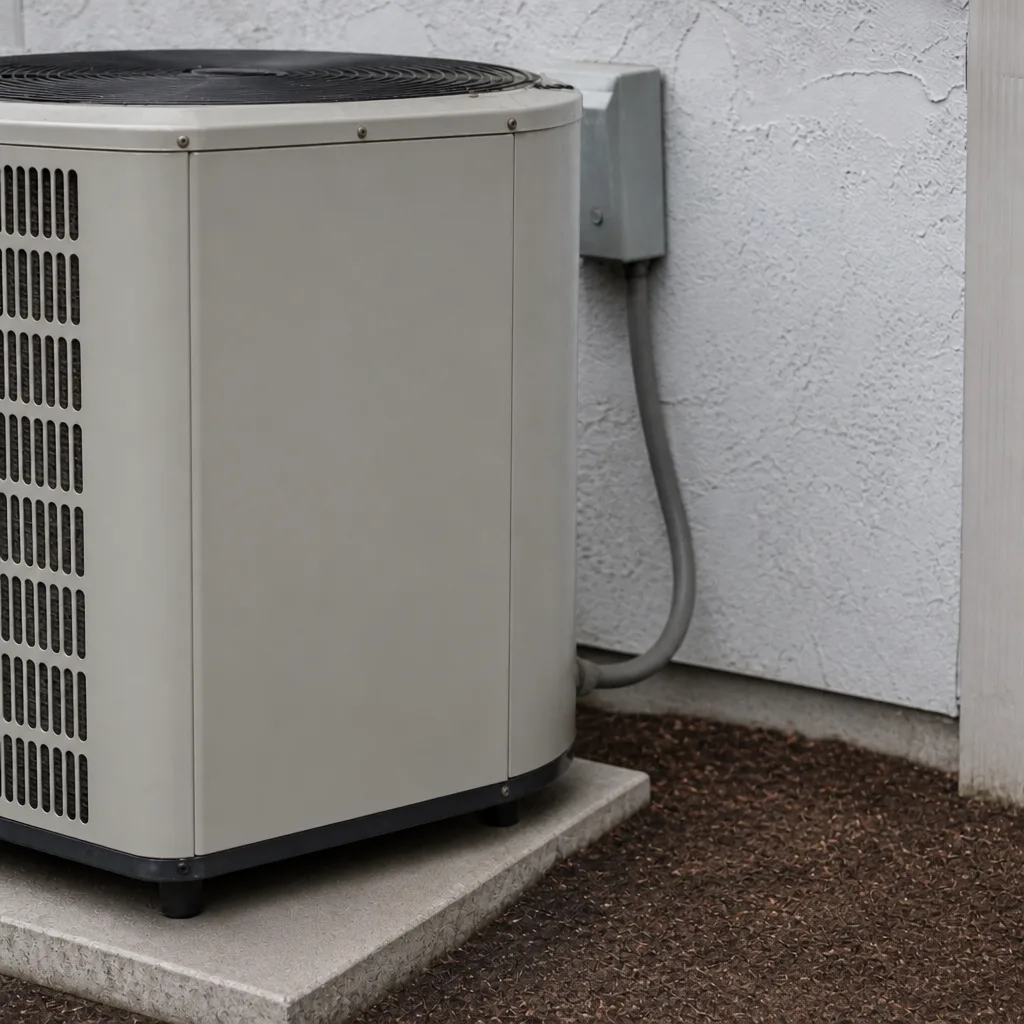
 Before
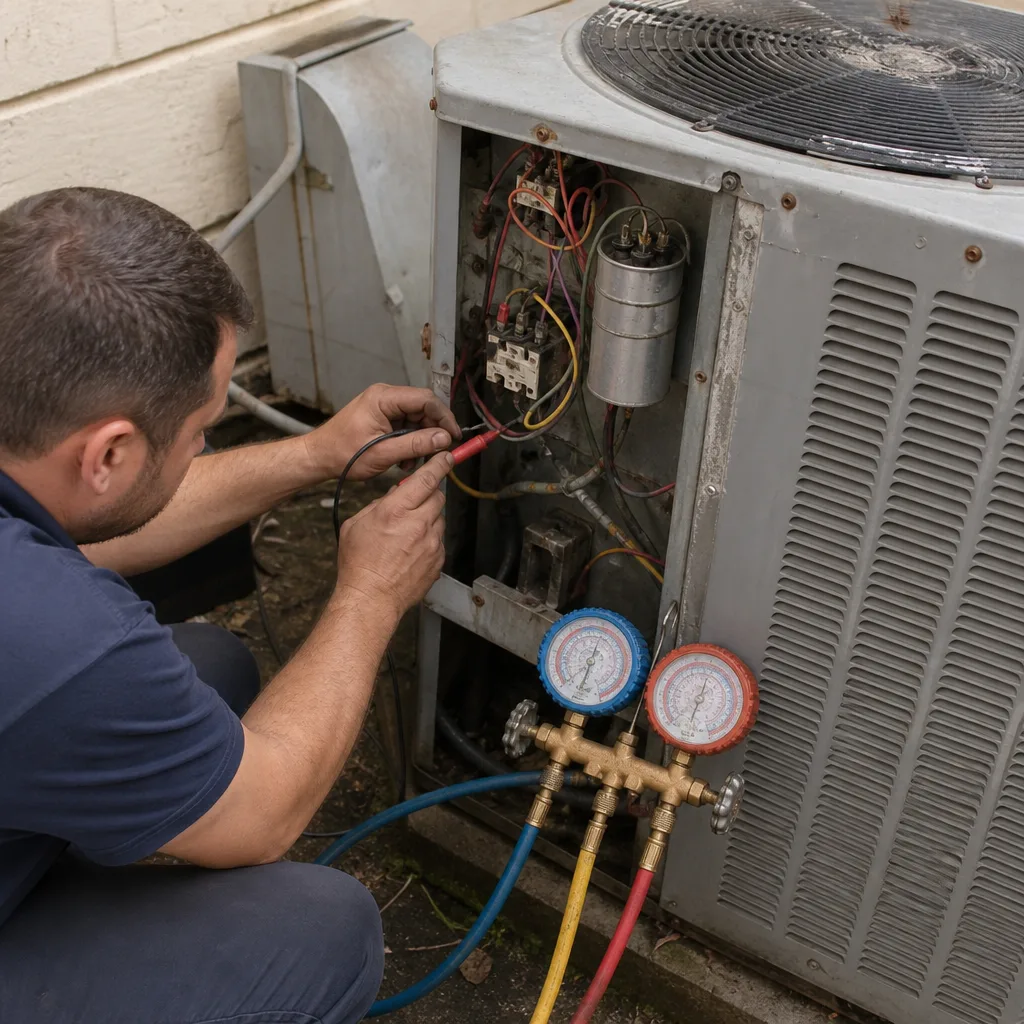
 After
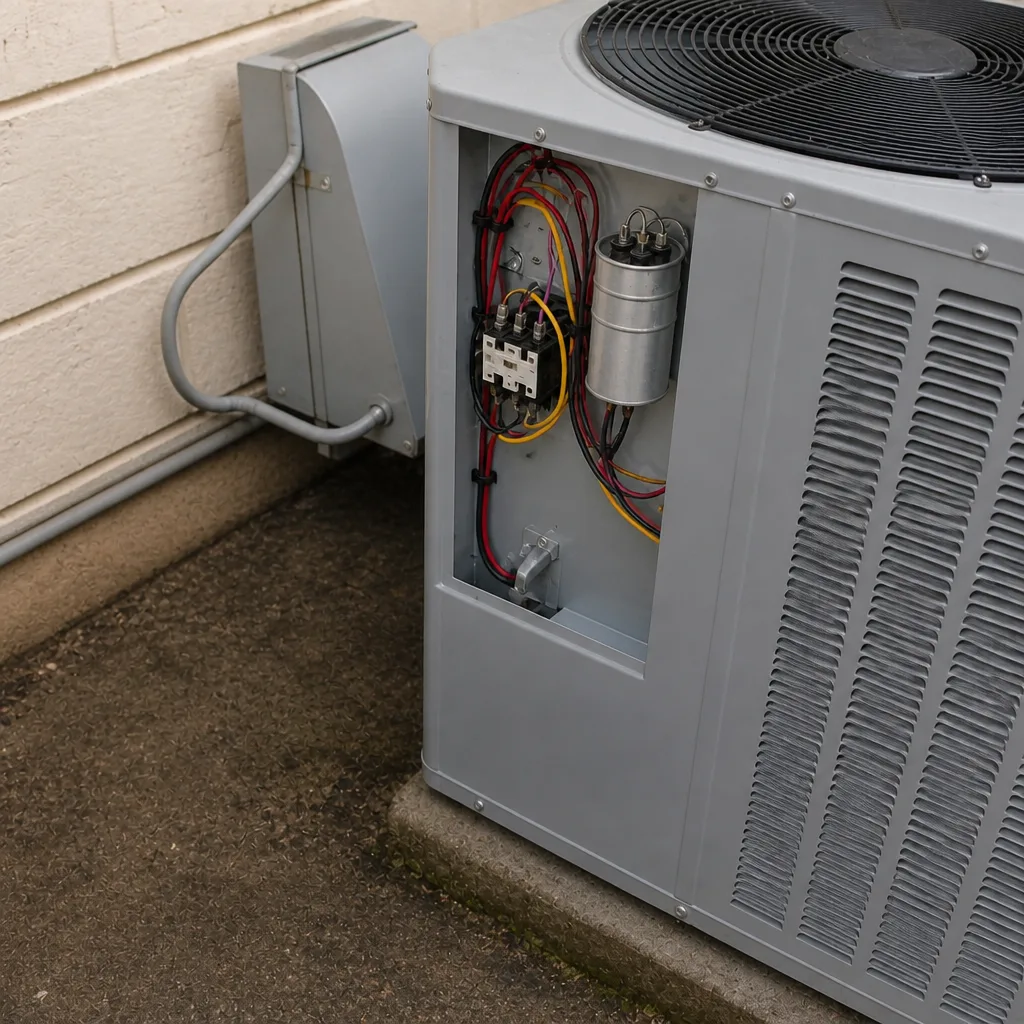
 Before
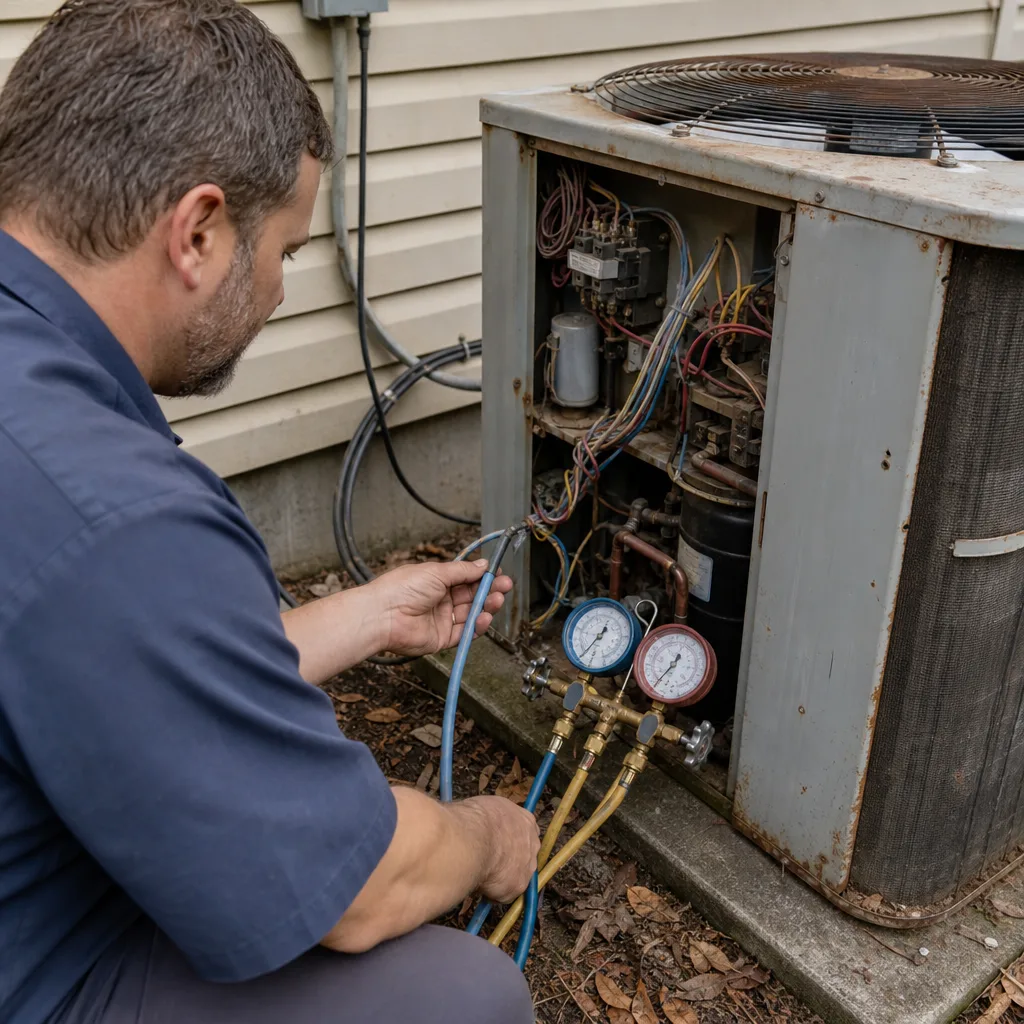
 After
 Before
 After
When to Call a Professional
Call a professional any time you smell gas near the furnace, see soot or a badly colored flame, or hear any concerning noise from the cabinet. Those are safety signals, not DIY opportunities. Call us when the furnace has failed more than twice in a season, when you’ve gotten a replacement estimate without a repair option, when you’re facing a confirmed heat exchanger finding you want verified, or when you simply want a straight answer on whether the system is worth keeping. We work on virtually every brand installed in Gainesville homes, so there’s no “we don’t service that” dead end. AC Repair Gainesville offers free estimates in Gainesville. Call (844) 223-9427.
Why a Multi-Brand Shop Matters for the Repair-or-Replace Call
One of the reasons we lean into multi-brand capability is that it takes brand pressure off the recommendation. If we only worked on one or two brands, the “right system” would conveniently be one of them. Because we’re certified to work on 9 of the most widely installed HVAC brands in residential homes, including Carrier, Trane, Lennox, Goodman, Rheem, York, Daikin, Bryant, and American Standard, we can match equipment to your budget instead of steering you toward a single manufacturer. A value-tier system that fits your home is often the right call; a premium unit that overshoots it isn’t. The right system for your home and your budget is the one that gets installed, commissioned properly, and supported afterward by Gainesville technicians who’ve seen the same model line in the same neighborhood.
Frequently Asked Questions
A confirmed, documented crack in the heat exchanger is a replacement trigger because it’s a combustion safety issue. That said, “confirmed” is the operative word. A proper diagnosis includes visual evidence you can see, a description of the location, and ideally a combustion gas test showing whether the fault is reaching your supply air. Ask for all three before you move forward.
Almost always no. Intermittent ignition in Florida humidity is most often a dirty flame sensor, a weak hot-surface igniter, or a pressure switch issue, and each is a common repairable component. Replacement is the wrong first move on a unit that fires reliably with a technician present. Call (844) 223-9427 for a diagnostic before you make a bigger decision – estimates are free.
If the repair is under roughly half the cost of a new system, repair is usually the right call. If it’s near or above that line and the unit is older with other components showing wear, replacement starts to make sense. The key is seeing both numbers side by side. Ask for the repair estimate and the replacement estimate in the same visit so you’re comparing something real.
The common codes across these brands point to ignition lockout, pressure switch faults, and high-limit trips. Carrier and Bryant boards often flash a lockout or pressure switch pattern; Trane and American Standard boards tend to report ignition and pressure switch faults; Rheem often flags ignition; York boards show the same trio. Write the code down. Our technicians read these on arrival.
Work through the thermostat, breaker, gas supply, filter, and power switch first (details in the cold-snap section above), then note the LED code and call. We answer 24/7. Fast dispatch from 7am to 7pm, Sunday through Friday. A call outside dispatch hours is booked into the next opening. Use a space heater in the occupied room while you wait, and never run a combustion appliance in a way it wasn’t designed to run.
Yes, especially for a replacement decision. When the same team handles the install and the future repairs, the diagnosis history stays with the system. That means nobody is guessing at what was installed, when, or why. It also means the company doing the repair has no incentive to call for replacement the moment a repair is inconvenient.
The Bottom Line
Most “furnace replacement” calls in Gainesville are repair calls that got mislabeled, and the minority that genuinely need replacing are clustered around three signals: a confirmed heat exchanger crack with documented evidence, a repair bill landing near half the cost of a new system on a furnace with other wear, or a pattern of repeated component failures. The rest of the decision comes down to discipline. Read your error codes, write them down, ask for the photograph, ask what the test showed, and compare repair and replacement estimates in the same visit. If a contractor won’t give you those three things, get a second opinion. The furnace doesn’t care who replaces it, but your wallet does, and a straight answer is worth a phone call.
Call (844) 223-9427 for a free estimate. We work on your brand, we tell you whether repair or replacement actually makes sense, and heating and cooling are handled by one team.
Written by the team at AC Repair Gainesville.