
Last updated November 15, 2026
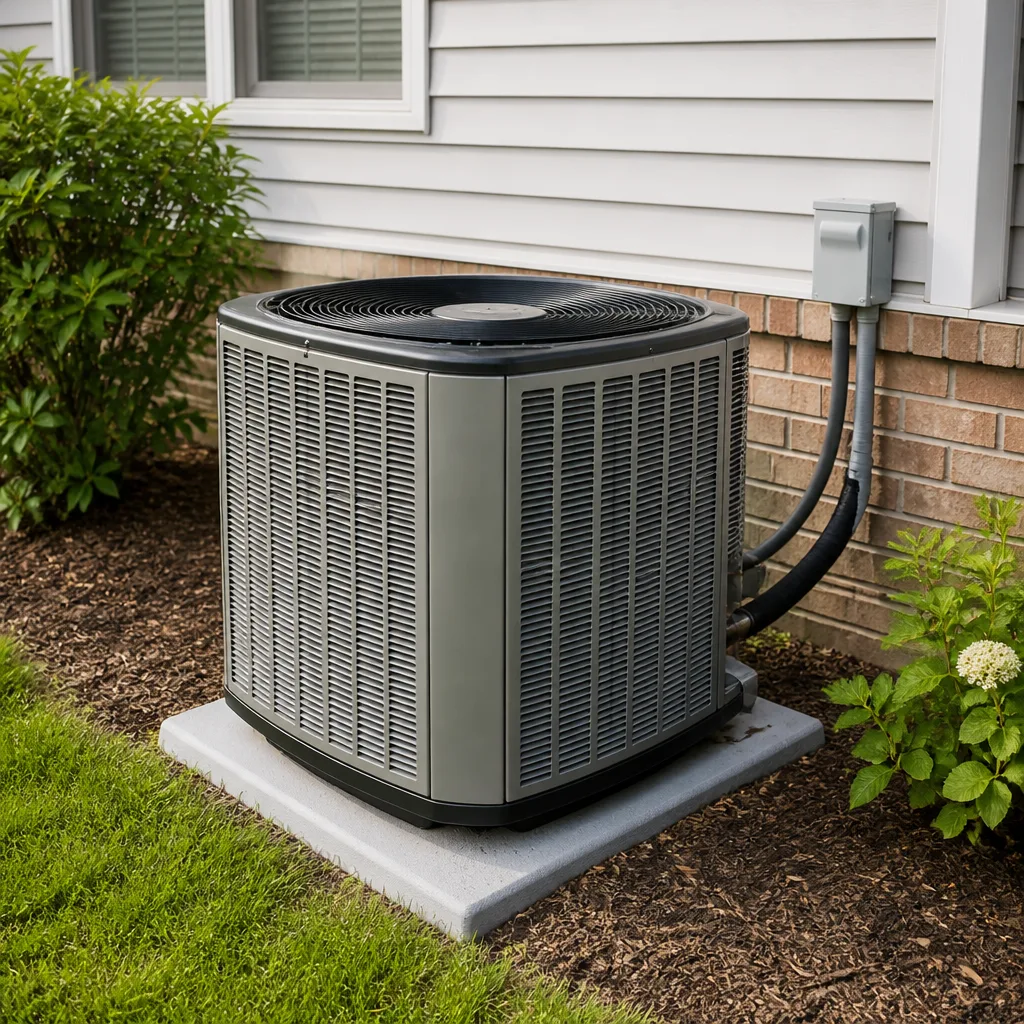 AC repair
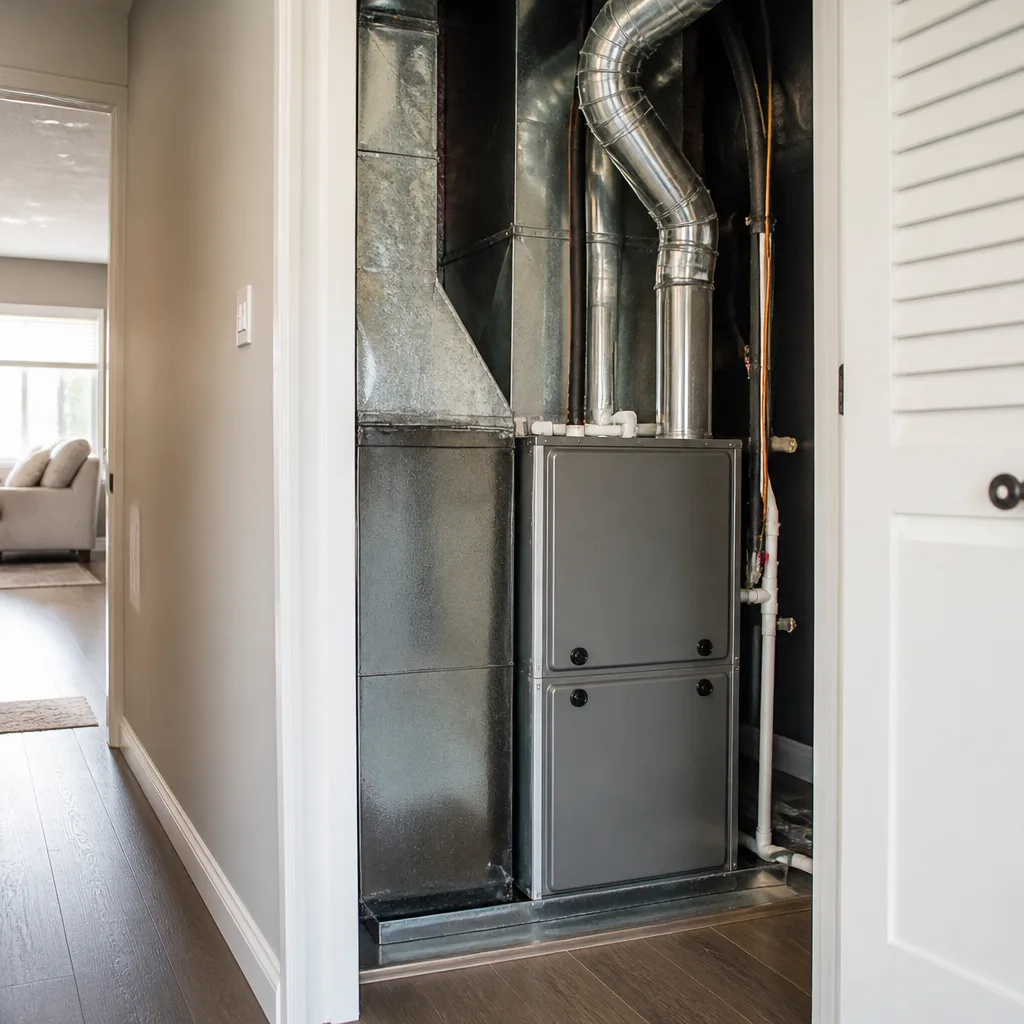 Furnace & heating
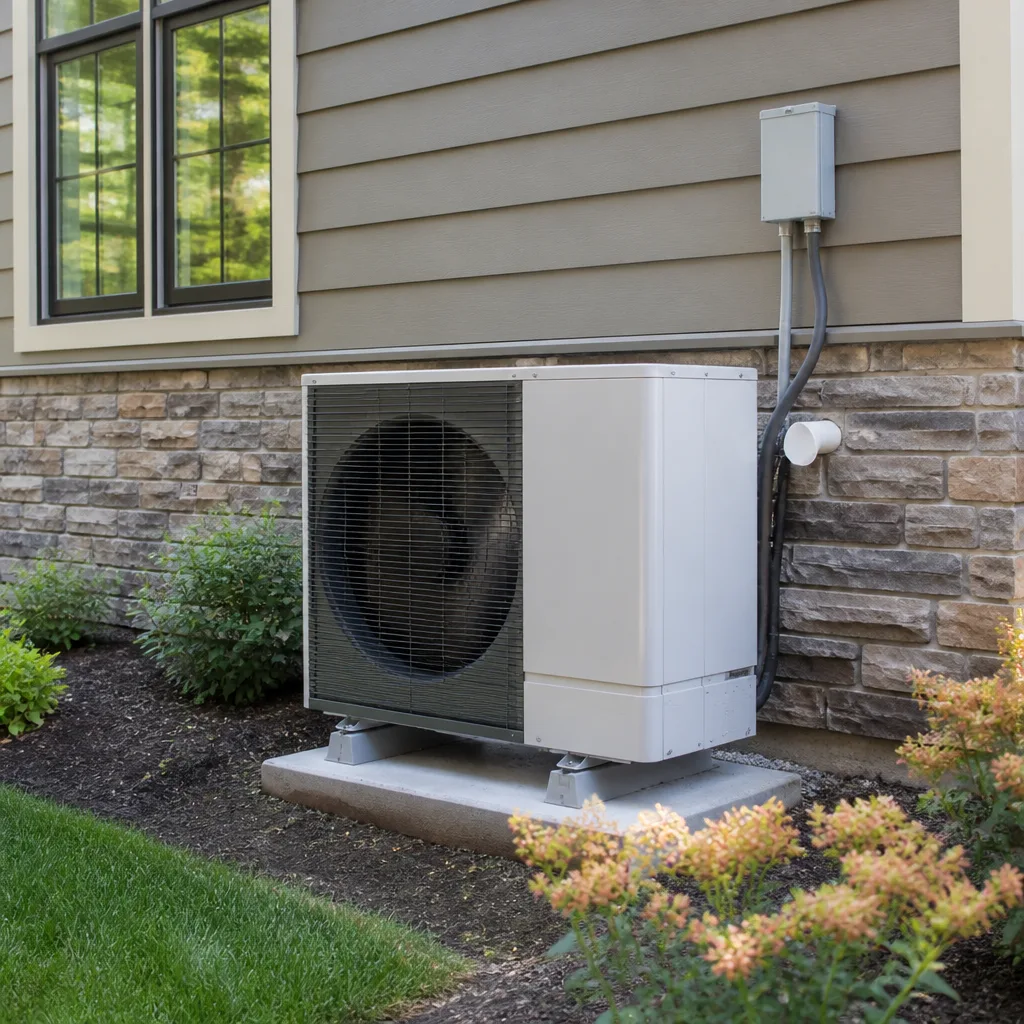 Heat pumps
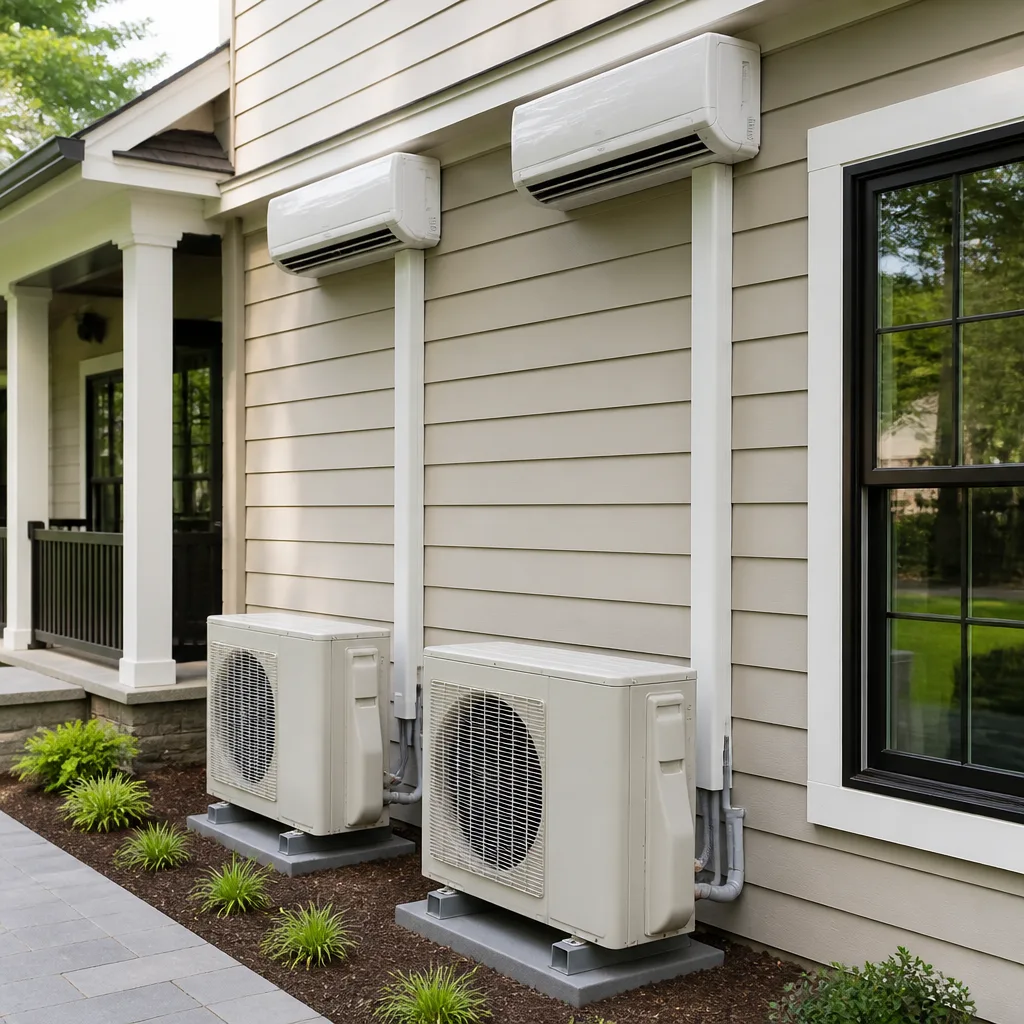 Ductless mini splits
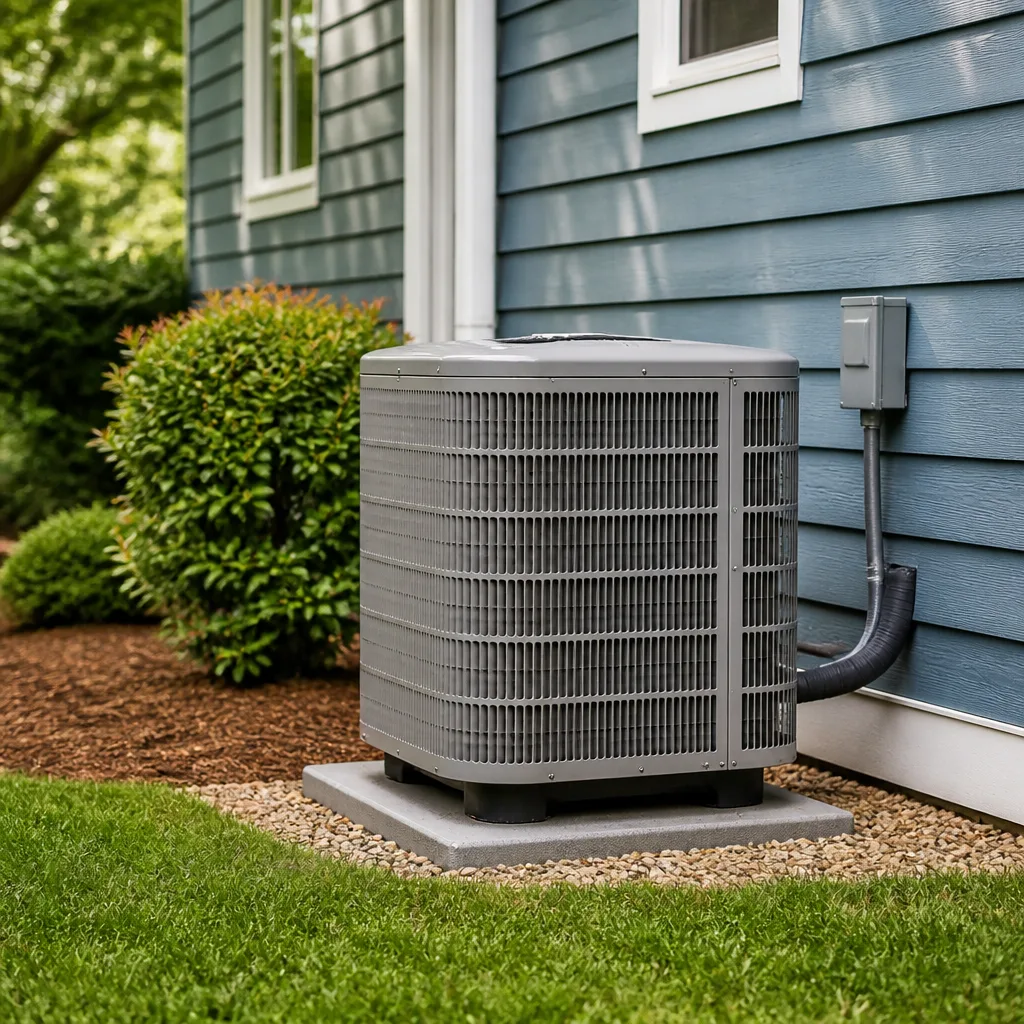 Carrier
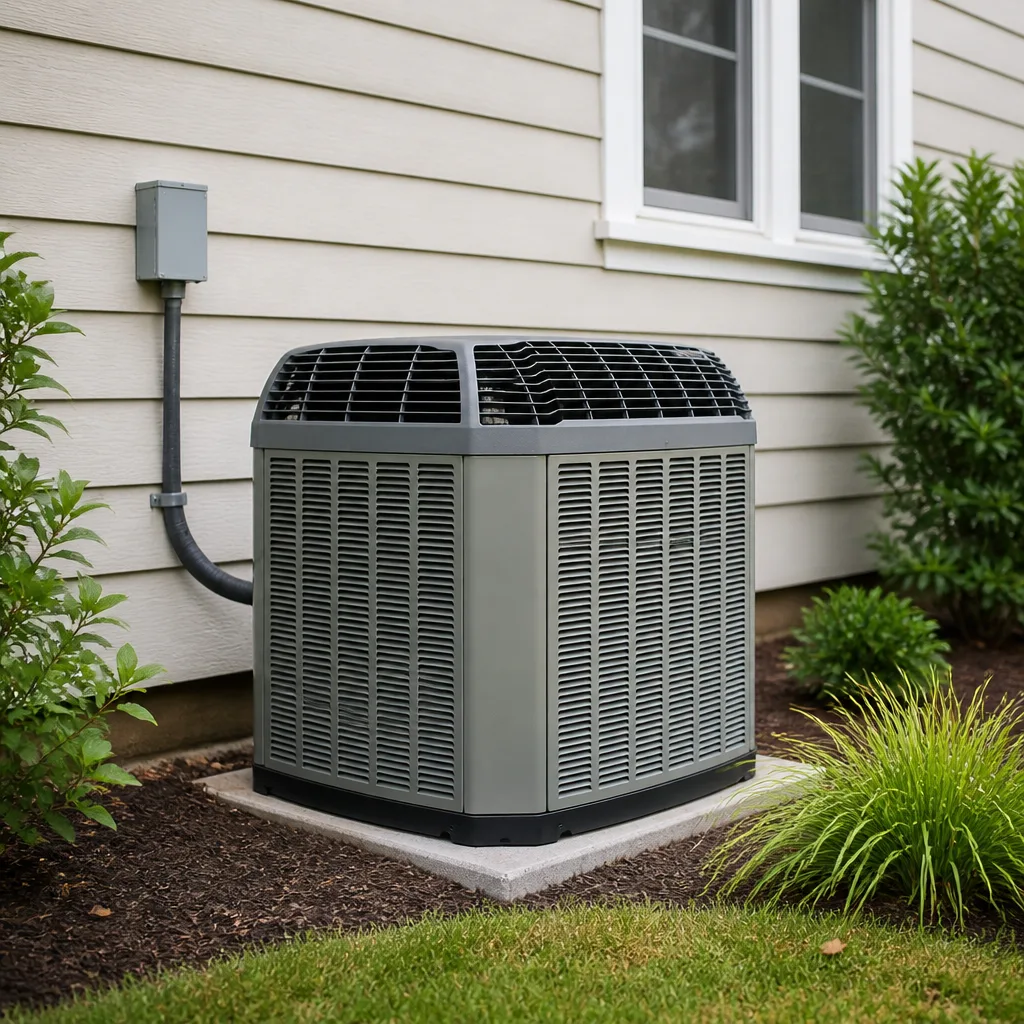 Trane
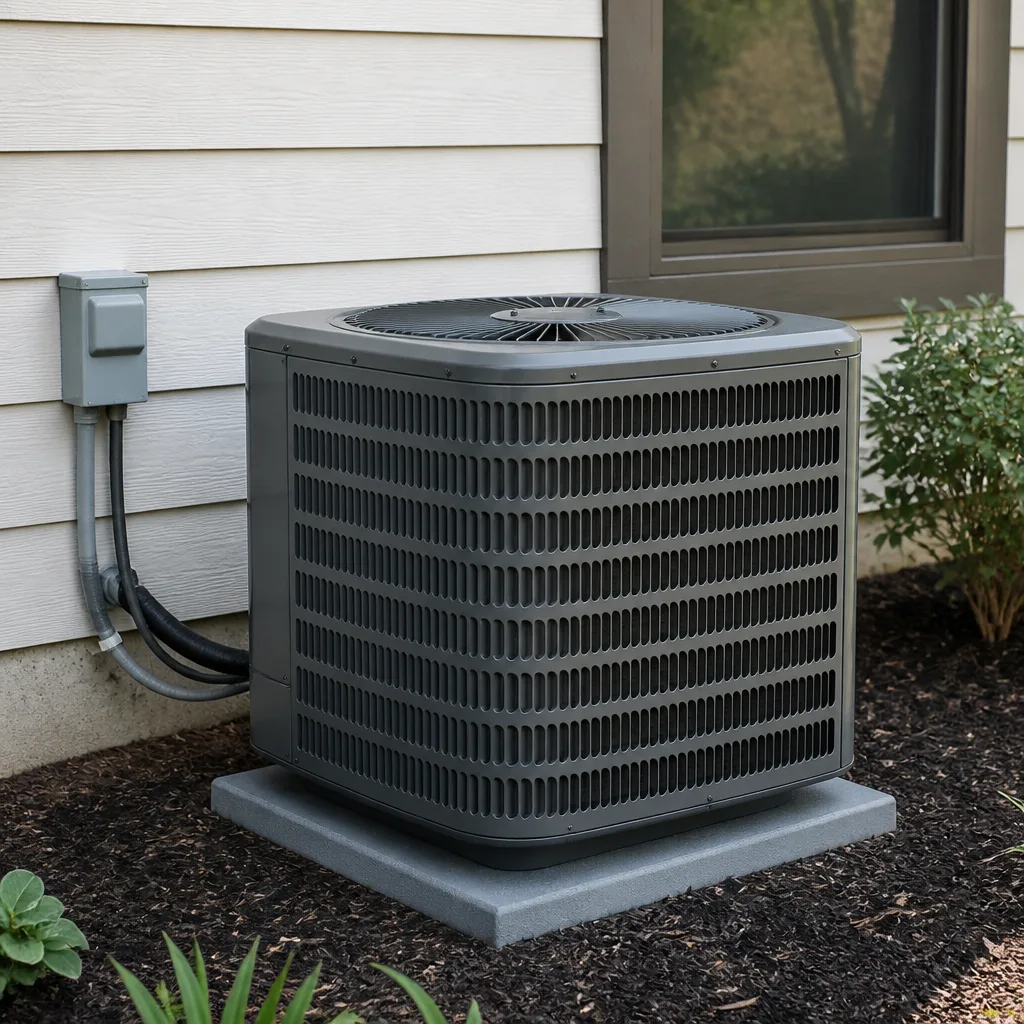 Goodman
Seasonal tune-up and full diagnostic on your Carrier, Trane, or Goodman system - readings shown to you before any repair is proposed
Diagnosis first, numbers second - you approve the repair price before a single part goes in.
Get your free estimateHVAC Emergency Preparedness Guide for Gainesville Homes
Most homeowners in Gainesville think of HVAC emergencies as a winter problem. That’s the first thing to get wrong. Our summers are the real test, and the failure that hurts people here is a compressor that quits during a week of 95-degree afternoons with a heat index north of 100, when every technician in North Florida is already booked out. What follows is a preparedness guide built for that reality: how to tell a dangerous failure from an uncomfortable one, what to keep ready before June, what to have on hand for a hurricane outage, and how to make your call the one a dispatcher prioritizes. We’ll cover the health thresholds, the cooling bridge kit, the diagnostic call, the post-storm restart checklist, and the difference between a true emergency and a standard repair.
Quick Answer
An HVAC emergency in Gainesville is any failure that pushes indoor temperatures into dangerous territory for infants, older adults, or anyone with heat-sensitive medical conditions, or any failure that leaves your system unsafe to restart after a storm. Everything else is a standard repair: uncomfortable, urgent to schedule, but not life-threatening. Prepare in three areas before the season starts – a cooling plan for one room, a basic diagnostic call script, and a post-hurricane restart checklist – so you’re never waiting days without a plan.
Styles & brands we work with
- AC repair
- Furnace & heating
- Heat pumps
- Ductless mini splits
- Carrier
- Trane
- Goodman
Table of Contents
- Which HVAC Failures Are Dangerous and Which Are Just Miserable
- Indoor Heat Thresholds: When to Evacuate Vulnerable Family Members
- The Cooling Bridge Kit: Sizing a Portable Unit for a Gainesville Home
- The Diagnostic Call: Information That Gets You Prioritized
- What Actually Counts as an Emergency in a Dispatch Queue
- The Post-Hurricane HVAC Checklist
- Brand Coverage and the Repair-or-Replace Decision Under Pressure
- Pre-Season Prep That Prevents Most Emergencies
Which HVAC Failures Are Dangerous and Which Are Just Miserable
Not every HVAC failure is a health event. Some are simply miserable. The distinction matters because it changes what you do in the first hour: one category means get the vulnerable people out, the other means get on the schedule and manage the heat.
Failures that are genuinely dangerous:
- Any suspicion of a refrigerant leak with symptoms. Headaches, dizziness, a chemical smell, or an oily residue near the indoor coil. Refrigerant displaces oxygen in a small space, and that’s a call-a-professional-now situation, not a wait-and-see.
- A furnace that smells of gas or produces soot or a yellow, lazy flame. Gas lines and combustion are not a homeowner repair. Shut the system off at the thermostat, leave the home if the smell is strong, and call a trained technician. This is one of the few places where “get out and call” is literal.
- A system that trips the breaker repeatedly. On the AC side, that can mean a failing compressor or a wiring fault. Don’t keep resetting it. That’s an electrical hazard, and electrical work belongs to a licensed professional.
- A system that floods the living space. A clogged condensate drain or a frozen-then-thawing coil can dump water into ceilings and floors. Water damage compounds fast in Florida humidity.
- Indoor temperatures climbing past the health thresholds covered in the next section. Heat is the emergency, not the equipment. The machine is replaceable. Your family isn’t.
Failures that are uncomfortable but survivable for most healthy adults:
- A system blowing warm air but running normally otherwise.
- A fan that won’t turn on at the indoor unit.
- Weak airflow from some vents.
- Ice on the outdoor unit’s lines when the system is running.
In Gainesville, the heat index is the variable that turns an ordinary breakdown into a health risk. A homeowner with a healthy household and a working fan can often ride out a warm afternoon. A household with an infant, an older adult, or someone on medication that affects heat regulation cannot. The failure is the same; the response isn’t.
Indoor Heat Thresholds: When to Evacuate Vulnerable Family Members
The indoor temperature that matters is not the thermostat setting. It’s the actual air temperature in the room where your most heat-sensitive family member spends their day. Measuring that is the single most useful preparedness step you can take, and it’s a five-dollar thermometer from any hardware store.
Our technicians have up to 15 years of experience, and in that time the pattern in Gainesville is consistent: households with a plan evacuate vulnerable members early and comfortably. Households without one wait until someone is already symptomatic. Here’s the framework we recommend.
Treat these as signs to move vulnerable people to a cooled location (a neighbor’s home, a relative, a cooling center, or a hotel):
- Indoor temperature above 80°F with high humidity for an infant, an older adult, or anyone with heart, lung, or kidney conditions.
- Indoor temperature above 85°F for anyone showing signs of heat stress: headache, nausea, confusion, or skin that’s stopped sweating.
- Any indoor temperature above 90°F is a general evacuation point, even for healthy adults, if the outdoor heat index is climbing and you don’t have a cooling plan working yet.
Signs of heat exhaustion that warrant medical attention: heavy sweating, weakness, cold or clammy skin, a fast or weak pulse, nausea, or fainting. Signs of heat stroke, which is an emergency call to 911: a temperature of 103°F or higher, hot and dry skin, confusion, or loss of consciousness. If you see the second set of signs, the HVAC system is no longer the priority.
In Gainesville, the June-through-September stretch is when these thresholds get crossed at night, not during the day. An overnight failure with all the windows closed is more dangerous than a daytime one because the house has no chance to cool. If you lose cooling after dark, close the windows, open interior doors, run fans, and get vulnerable family members to a cooled space before bed. Call us. We answer 24/7. A call outside dispatch hours is booked into the next opening, Sunday through Friday, 7am to 7pm.
The Cooling Bridge Kit: Sizing a Portable Unit for a Gainesville Home
A cooling bridge kit is a pre-assembled plan to cool one room of your home when the central system fails. It buys you time. It doesn’t replace the central system, and it doesn’t solve a whole-house emergency, but a prepared Gainesville household can keep one bedroom livable for days while a technician gets to them.
The kit has five parts:
- A portable or window AC unit sized to the room, not the house. Portable units are rated in British thermal units (BTUs), and the general sizing rule for a standard-insulation Florida room is roughly 20 BTUs per square foot of floor area, with a bump for a south- or west-facing room with lots of glass. A 150-square-foot bedroom generally lands in the 5,000 to 6,000 BTU range. A 300-square-foot living space needs closer to 8,000. Undersizing is the most common mistake, and it wastes money.
- Window versus portable: the honest trade-off. A window unit is cheaper per BTU, cools the room faster, and is more efficient. But it requires a window that opens and a secure mount, and many Gainesville homes have HOA rules or sliding windows that make the install awkward. A portable unit rolls to any room and needs only a window or a wall vent for the exhaust hose, but it costs more for the same cooling and loses efficiency through that hose. If you have a compatible window and a strong helper, a window unit is the better bridge. If you’re in an apartment or a home with restrictive windows, a portable unit is the practical choice.
- A window-sealing kit for the exhaust hose. The exhaust hose leaks heat right back into the room if you don’t seal the window around it. These kits are inexpensive and they’re the difference between a portable unit that works and one that just makes noise.
- A room thermometer. You need to know what temperature the room is actually reaching. Eyeballing it is how people miss an approaching threshold.
- Bottled water and a battery-powered fan. Not glamorous. Effective.
Have the unit tested before June. Nothing is worse than finding out in July that the portable AC has a dead compressor. Set it up in the room you plan to use as your cooling shelter, run it for an hour, and measure the temperature drop. Keep the receipt and the manual together.
The Diagnostic Call: Information That Gets You Prioritized
When our dispatch is backed up after a heat wave or a storm, the calls that rise to the top of the queue are the ones that give the technician something to work with. A caller who says “my AC isn’t working” gives us nothing. A caller who gives five specific pieces of information can be routed to the right technician, with the right part, on the first visit.
Before you call, collect this information:
- What the system is doing right now. Is the outdoor unit running? Is the indoor fan blowing? Is the air warm, cool, or room temperature?
- What the thermostat says. Current temperature, set temperature, and whether the display is on. If it’s blank, that’s a different diagnosis than a running system.
- When you first noticed the problem, and whether it changed. “Started yesterday afternoon, it was cooling this morning, now it’s warm” tells a technician more than any single symptom.
- The equipment details. The brand and model on the data plate of the outdoor unit. The brands we work on include Rheem, York, Daikin, and Bryant, along with five other major manufacturers, so there’s a good chance we already know your system’s common failure points.
- Anything unusual. Ice on the lines, water on the floor, a smell, a noise. That last detail often changes the priority of your call.
Also tell us whether anyone in the household is in a heat-sensitive group. That’s not a sales tactic. It’s the single biggest factor in how fast we route a call in a backlog. A household with an infant on a 100-degree heat-index day gets ahead of a household that’s just uncomfortable.
You can also check the easy things before you call. Make sure the thermostat isn’t in a mode that’s holding the fan off while the setpoint is satisfied. Check that the outdoor unit’s disconnect switch is closed. Replace a dirty filter. Those cover a share of “no cooling” calls we get in Gainesville, and they’re worth checking so your technician isn’t diagnosing a filter.
What Actually Counts as an Emergency in a Dispatch Queue
Every HVAC company in North Florida runs a priority queue. In a heat wave, the queue can run days long, and the calls that move to the front are the ones with a health or safety dimension. Understanding that is the difference between a repair booked for tomorrow and one booked for next week.
What jumps the queue:
- Any household with a vulnerable person and an indoor temperature above the thresholds in this guide.
- Any gas smell, combustion smell, or suspected refrigerant leak.
- Any system that’s actively flooding the home or tripping a breaker.
What’s urgent but standard:
- A system that quit working and the home is getting hot, but no vulnerable household members and indoor temperatures still under 85°F.
- A system blowing warm air on a moderate day.
- Strange noises or weak airflow.
What can usually wait:
- Routine tune-ups and filter checks.
- Minor thermostat quirks.
- Seasonal maintenance.
The single most effective thing you can do to get faster service in a backlog is state the health situation clearly on the call. Don’t hint at it. Say it. “I have an infant in the home and the inside temperature is 84 degrees” is a priority flag. “My AC isn’t working” isn’t, even if both are equally true.
When you call, we’ll ask for a free estimate on any repair or replacement. We answer 24/7, and fast dispatch from 7am to 7pm gets a technician to you once your spot is booked. Call (844) 223-9427.
The Post-Hurricane HVAC Checklist
Hurricane season in Gainesville runs from June through November, and the HVAC failures that matter most are the ones that show up after the storm passes. A system that took on water, got struck by a surge, or sat under debris can be dangerous to restart. Here’s what to check before you turn anything back on.
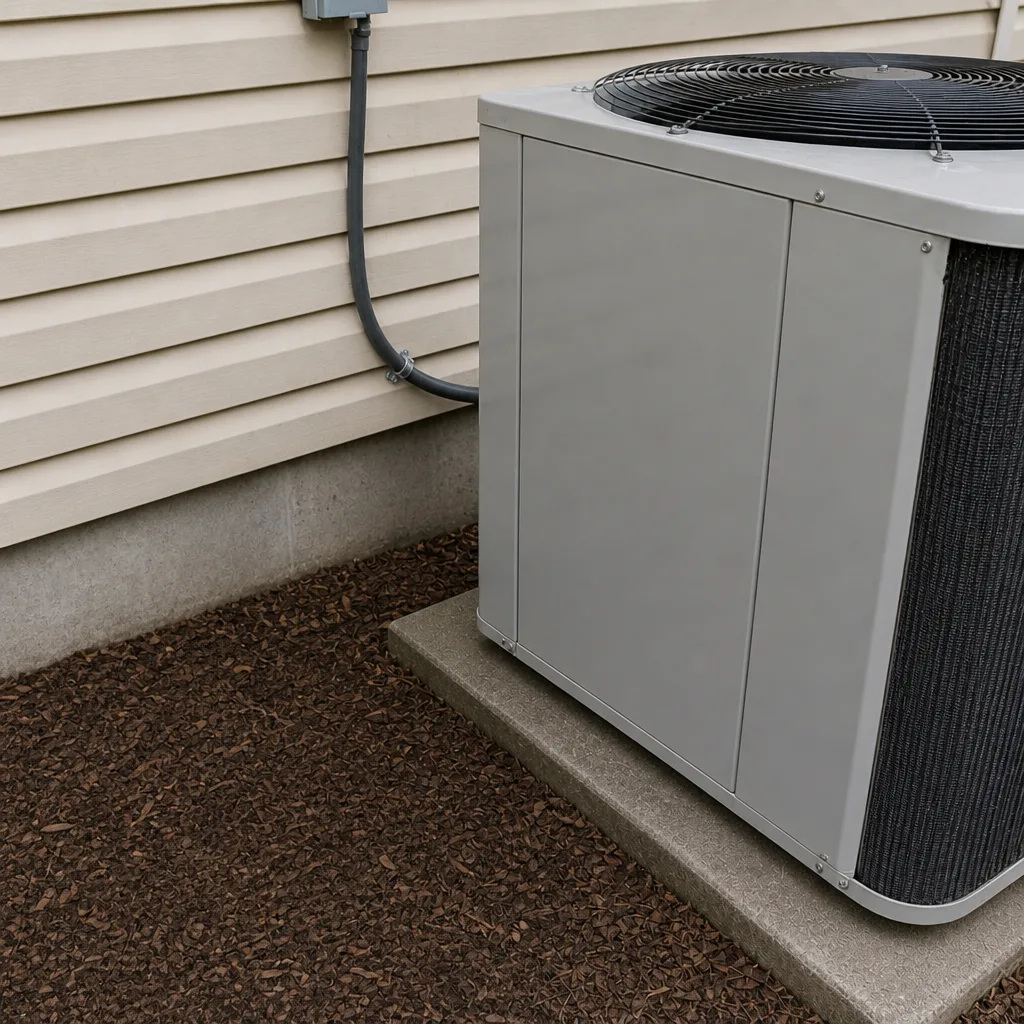
- Look at the outdoor unit before you touch the thermostat. If it’s tilted, sitting in standing water, packed with debris, or off its pad, do not restart it. A compressor that’s been submerged or shifted can fail catastrophically or create an electrical hazard on start-up.
- Check for obvious electrical damage. Storm surge through the grid can damage a breaker, a disconnect, a contactor, or a capacitor. If you see scorch marks, smell burnt plastic near the unit, or the breaker won’t stay reset, stop. That’s a licensed electrician or HVAC technician’s call, not yours.
- Check the condensate drain line. Debris during a storm can clog it. A clogged line, combined with high post-storm humidity, can dump water into your ceiling before you realize the system is running.
- Look inside the home. Water staining on the ceiling near the indoor air handler, moisture around the base of the unit, or any water in the return ductwork is a stop sign. Do not restart.
- Verify power to the whole home is stable first. Run the system only after the grid has settled and any generator use is managed by someone who knows the transfer switch. Backfeeding a house is dangerous.
- Then reset the thermostat, set it to cool, and observe for ten minutes. Listen for unusual noises, check for cool air at a vent, and watch the outdoor unit. If anything seems off, shut it off and call.
The most common post-hurricane HVAC problem we see in Gainesville isn’t catastrophic damage. It’s a system that took on a surge and lost a capacitor, or a condenser coil packed with storm debris. A quick inspection beats a burned-out compressor every time.
Brand Coverage and the Repair-or-Replace Decision Under Pressure
When a system fails in the middle of a heat wave, the last thing you want is a “we don’t service that brand” dead end. It’s why we work on the widest range of major residential equipment, so whatever system is in your home, we can diagnose it and repair it.
The brands we service include Carrier, Trane, Lennox, Goodman, Rheem, York, Daikin, Bryant, and American Standard. That range matters in two ways for a Gainesville homeowner facing a decision:
- If your system is a value-tier unit – a Goodman or a Rheem, for example – the honest repair-or-replace calculation is often different than it is for a premium-tier system. The point is to weigh the repair cost against the remaining life of the unit, not to push a new install.
- If your system is premium-tier – a Trane or a Lennox, for example – the repair is often the better financial call even when the numbers look high, because the equipment’s remaining useful life justifies it. And because we work on those brands, repairing them isn’t a specialty job you have to hunt down.
If you’re replacing, our AC installation work covers both premium and value-tier brands, so the recommendation can match your budget instead of a single manufacturer. And whole-home comfort stays with one team: the same company that installs your system also handles furnace repair, so you’re not coordinating a different contractor every time the heating or cooling side acts up.
Whether to repair or replace is a real decision. Our approach is to give you the honest assessment: repair if the system has meaningful life left and the fix is proportionate, replace if the repair is throwing money into equipment that’s near the end. That’s what the customer needs, and it’s what we’d want for our own homes.
For a repair in Gainesville, AC repair can be scheduled the same day in many cases. For a replacement, the work is planned around a written estimate and a set install date, not rushed.
Pre-Season Prep That Prevents Most HVAC Emergencies
Most HVAC emergencies we see in Gainesville had warning signs for weeks. A dirty coil, a weak capacitor, a clogged drain line, a filter that’s been in place for a year – these are slow problems that become sudden failures during the first real heat wave, when the system runs longer and harder than it has all year.
Pre-season prep is boring. It’s also the highest-return thing you can do. Here’s our short list:
- Replace the filter before June. A dirty filter is the most common cause of no-cooling calls in Gainesville. Check it monthly through the summer.
- Clear the outdoor unit. Trim vegetation back at least a couple of feet from the condenser so it can shed heat. Clear debris from the top and sides.
- Flush the condensate drain. A cup of water down the drain line a few times a year keeps it flowing. A clogged line in a humid climate can flood a ceiling.
- Have a technician inspect the system before the cooling season. A pre-season check catches a weak capacitor, a low refrigerant charge, or a failing contactor before it strands you in a heat wave. The brands we work on mean virtually any system is covered.
- Test the heating side in the fall. Furnaces get less attention in Gainesville, but a gas furnace that hasn’t been checked can become a real safety issue. A pre-winter furnace repair check is worth the call.
We serve homes across Gainesville and the surrounding area, and our technicians have up to 15 years of experience working on residential systems of every age and tier. If you’re not sure when your system was last checked, that’s the sign to book a pre-season visit.
Common Mistakes to Avoid
- Waiting until the indoor temperature hits the danger line to call. The queue is the longest when the heat is highest. Call at the first sign of trouble, not after the house is already too hot.
- Not mentioning vulnerable household members on the call. A disability, an infant, or an older adult changes how fast a call gets routed. Leaving it out costs time you don’t have.
- Setting up a portable AC without sealing the window. A portable unit with an unsealed exhaust leaks heat right back into the room. The kit costs less than the wasted electricity.
- Restarting a hurricane-affected system without checking it. A compressor that took on water can fail catastrophically. Look first, then restart.
- Resetting a breaker that keeps tripping. That’s an electrical problem, and repeated resets can make it worse. Shut it off and call.
- Ignoring ice on the lines and running the system harder. Ice usually means low refrigerant or restricted airflow. Running it only makes the problem worse.
- Buying a portable unit sized for the wrong room. Undersizing is the most common portable AC mistake. Measure the room and match the BTUs to the space.
See the difference
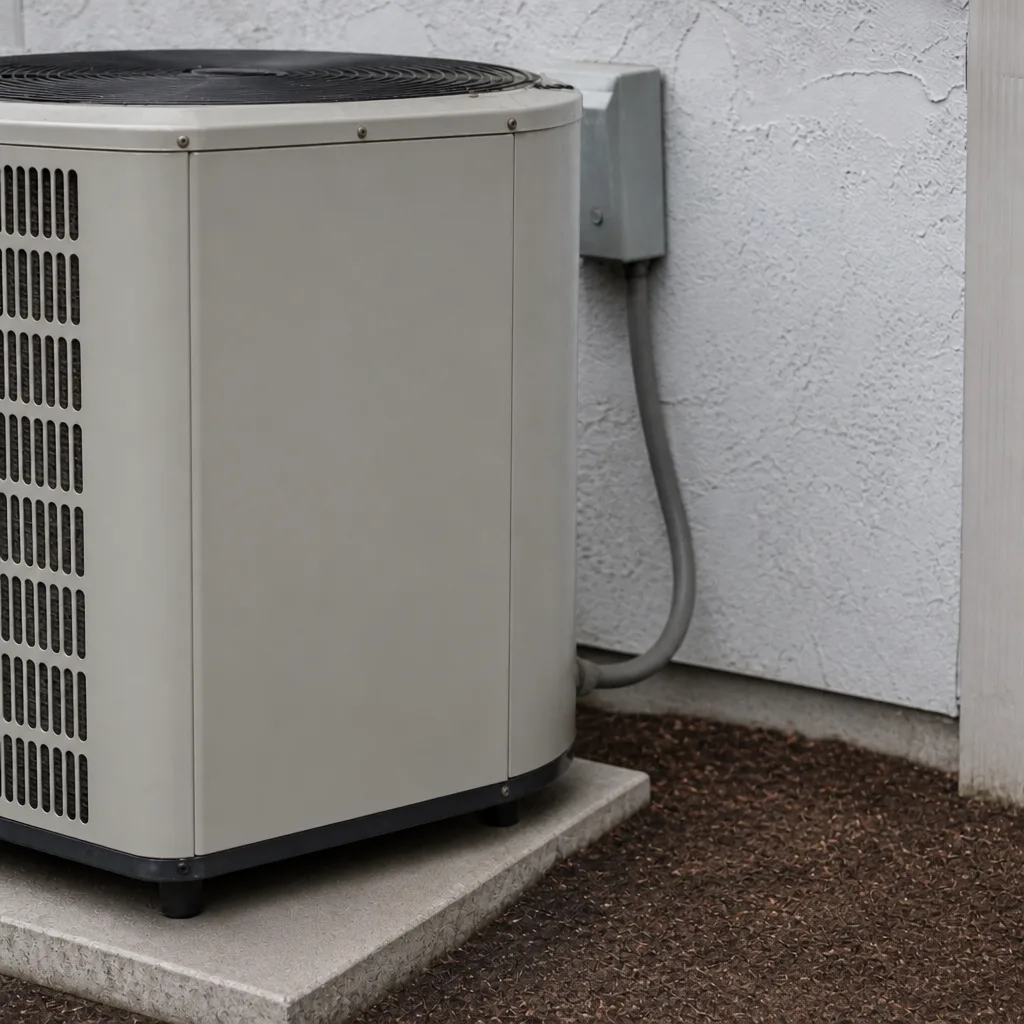
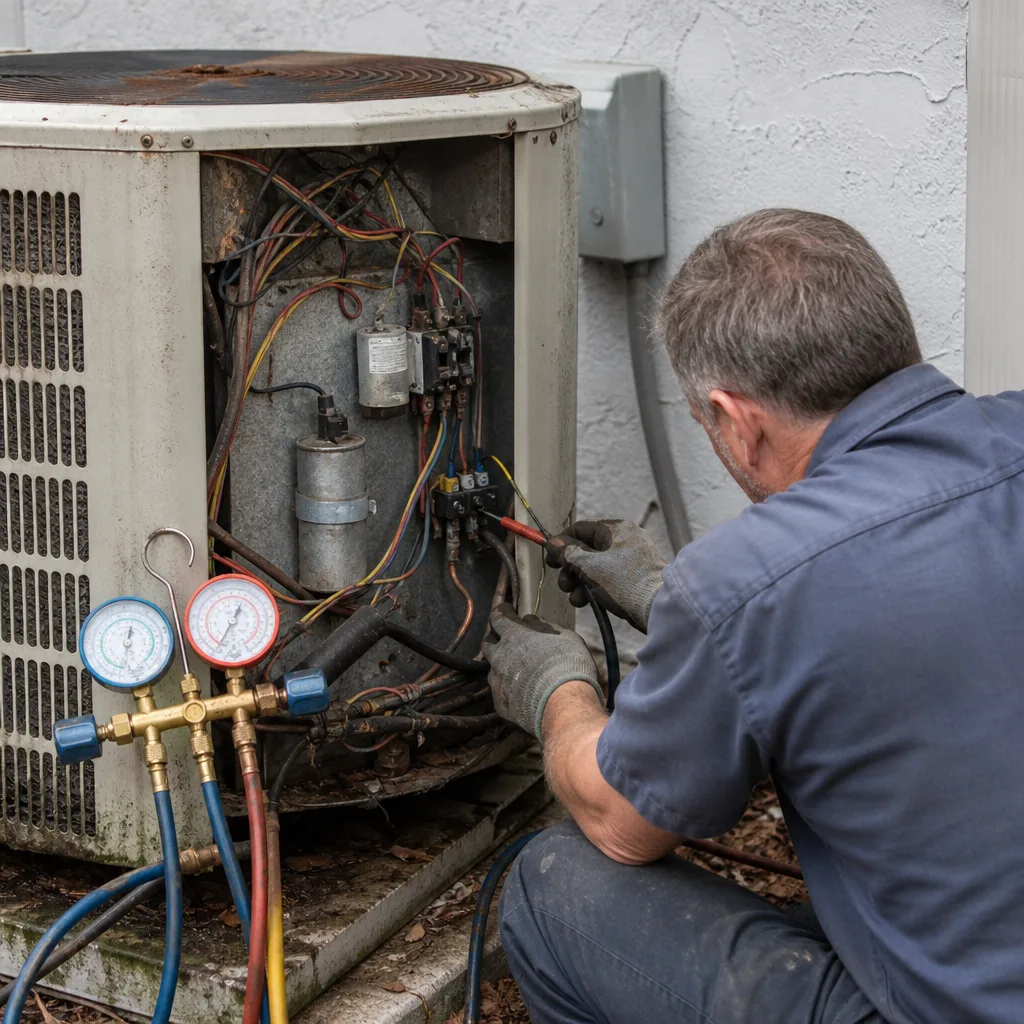 Before
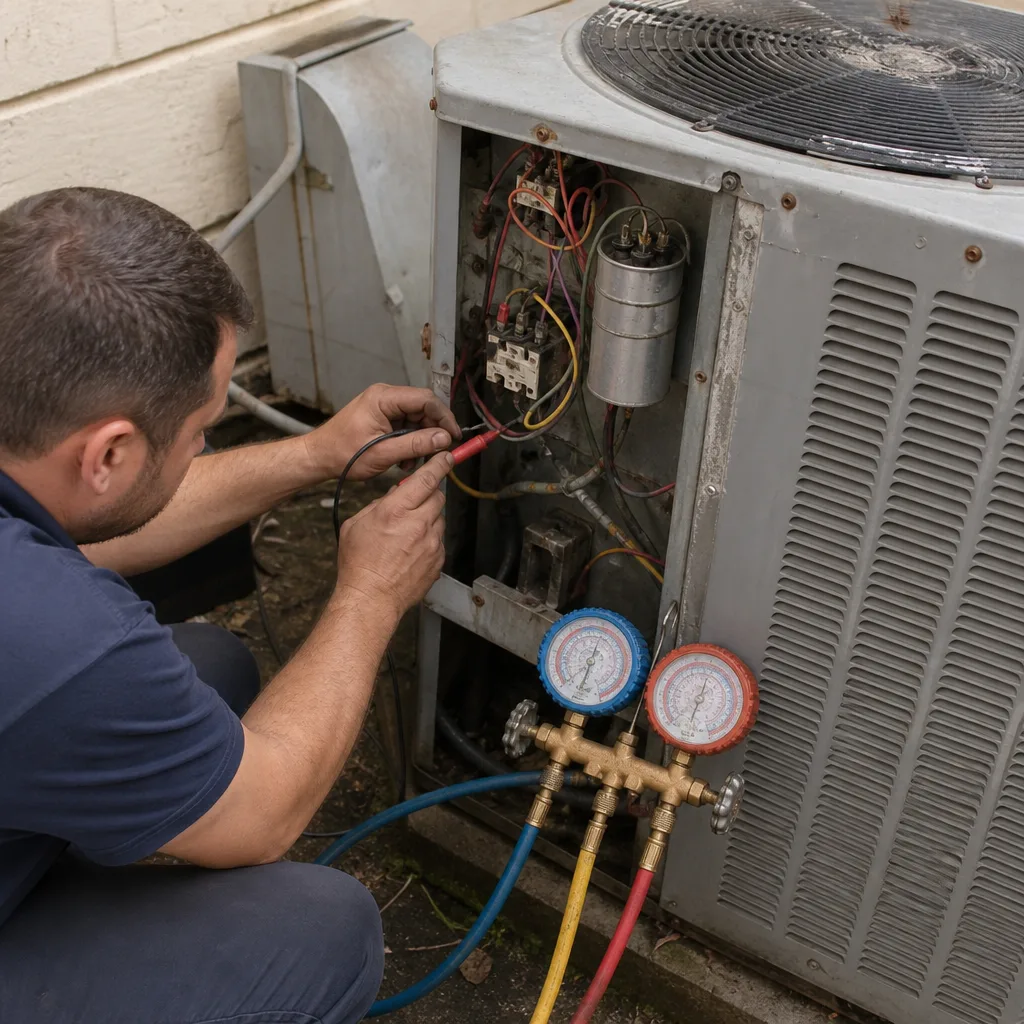
 After
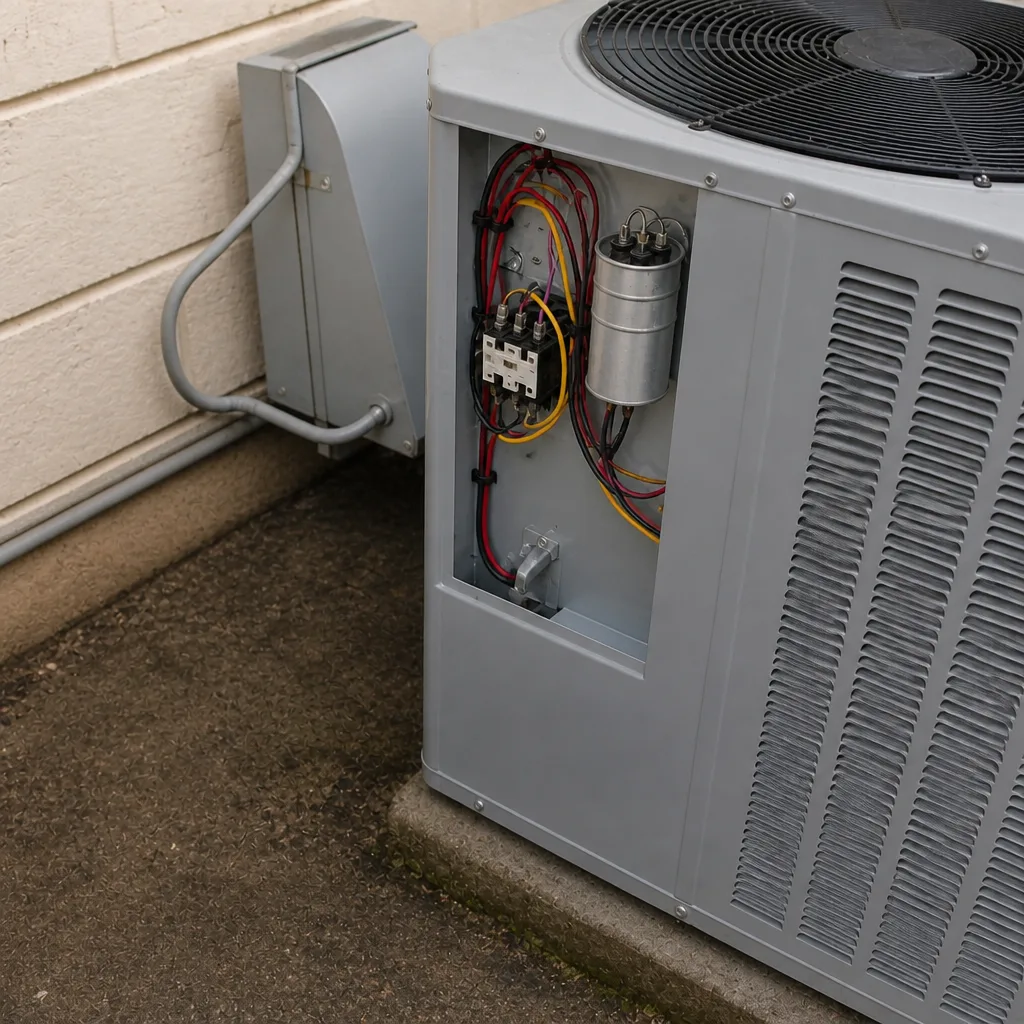
 Before
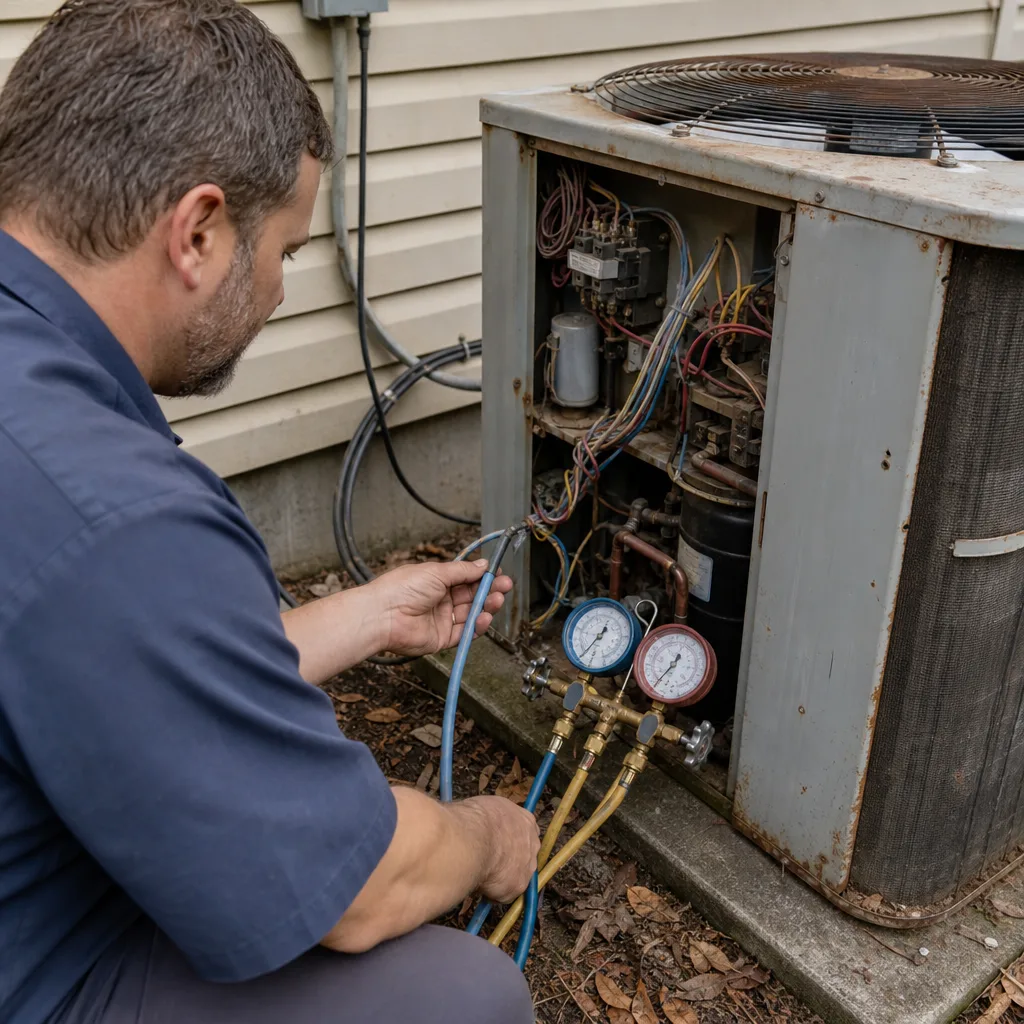
 After
 Before
 After
When to Call a Professional
Call a professional when the failure involves anything you shouldn’t touch: gas, refrigerant, electrical faults, or water where it doesn’t belong. A system that smells of gas, trips the breaker, or floods the floor is not a DIY problem. On the ordinary side, a system that’s blowing warm air and won’t cool, an indoor fan that won’t run, or a heat index that’s pushing the house past your comfort zone on a regular basis all deserve a technician’s diagnosis.
If you’re unsure, call. A free estimate costs you nothing and gets you a straight answer. AC Repair Gainesville offers free estimates in Gainesville. Call (844) 223-9427. We answer 24/7, and fast dispatch from 7am to 7pm, Sunday through Friday, gets a technician out to look at your system.
Frequently Asked Questions
It depends on the household. A broken AC is uncomfortable but typically survivable for healthy adults with a working fan and a cooling plan. It becomes dangerous when a vulnerable household member is in the home and indoor temperatures cross roughly 80°F with high humidity, or 85°F for anyone showing heat stress signs. If someone is in the home who’s at risk, call immediately.
Evacuate vulnerable family members when indoor temperatures cross about 80°F with high humidity if an infant, older adult, or anyone with a heat-sensitive condition is in the home. For healthy adults, an indoor temperature above 90°F is a general evacuation point. Get out early. Heat exhaustion and heat stroke are medical events, not HVAC events.
Yes, and it’s the single best short-term fix. A portable AC sized to a single room (roughly 20 BTUs per square foot of floor area) can keep a bedroom livable while you wait for a repair. Seal the window around the exhaust hose so the unit actually cools the room. Test it before June so you know it works.
Only after you’ve inspected it. Do not restart an outdoor unit that’s tilted, sitting in standing water, packed with debris, or showing scorch marks. Check for water staining near the indoor unit and around the base. If anything looks wrong, stop and call a technician. Fast dispatch from 7am to 7pm, Sunday through Friday, gets someone out to inspect.
Yes. Every HVAC company runs a priority queue in a heat wave, and the calls that move to the front have a health or safety dimension. State the situation clearly on the call: “I have an infant and the indoor temperature is 84 degrees” is a priority flag. If you’re unsure whether your situation qualifies, call and ask. We answer 24/7.
We work on Carrier, Trane, Lennox, Goodman, Rheem, York, Daikin, Bryant, and American Standard. That range means virtually any system a homeowner already owns is one we can diagnose and repair. There are no “we don’t service that brand” dead ends for a Gainesville household. If it’s your existing system, call and we’ll tell you what we find.
The Bottom Line
HVAC emergencies in Gainesville are a heat story, not a cold one. The failures that hurt people here are the ones that arrive during a heat wave or after a hurricane, when every technician in North Florida is already booked. Prepare in three specific ways: get your household’s cooling plan in place before June, learn the indoor heat thresholds and the plans to move vulnerable family members, and have a diagnostic call ready with the five things a dispatcher needs. Understand what actually qualifies as a priority call, know how to inspect a storm-affected system before restarting it, and stay ahead of the slow failures with pre-season checks. That’s the difference between a hot afternoon and a health event. If you need a technician, call (844) 223-9427. We answer 24/7, and fast dispatch from 7am to 7pm gets your system looked at. Free estimates. The written estimate sets the price.
Written by the team at AC Repair Gainesville.