
Last updated November 15, 2026
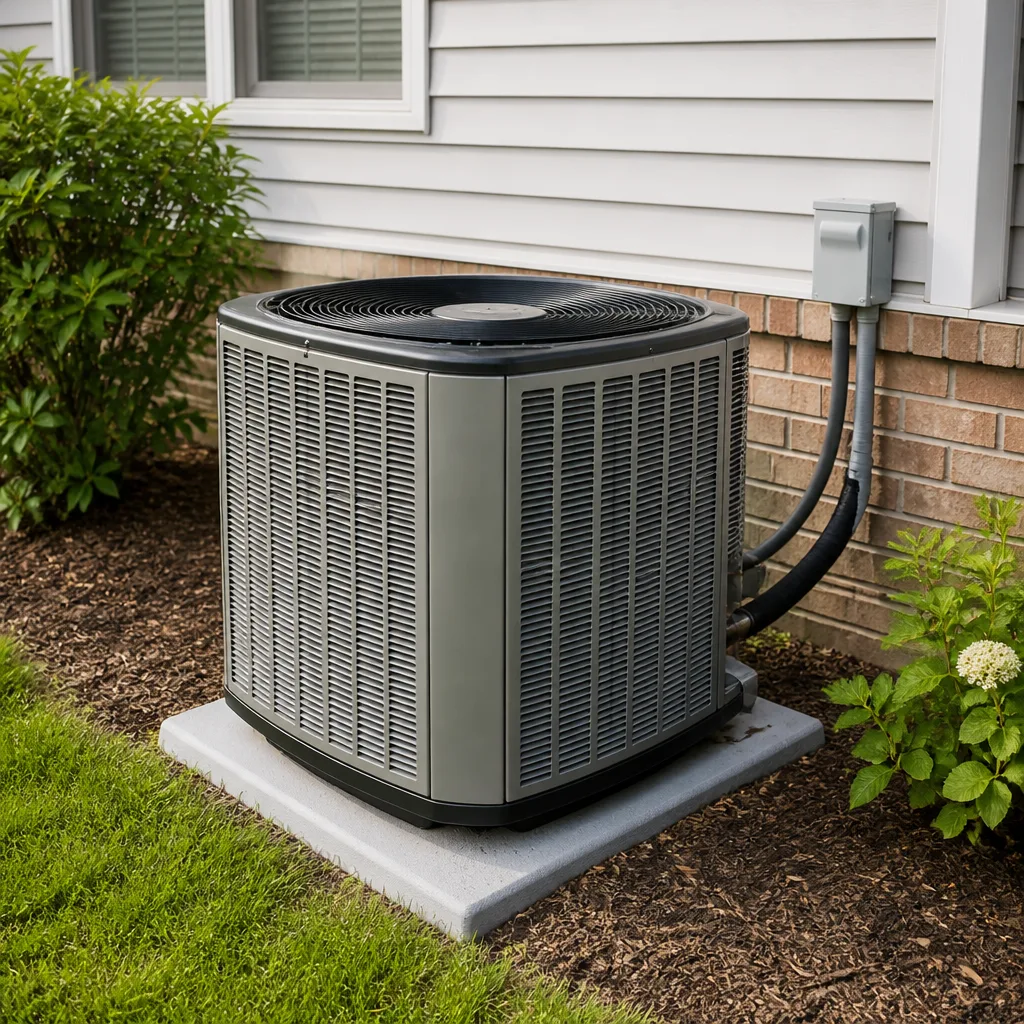 AC repair
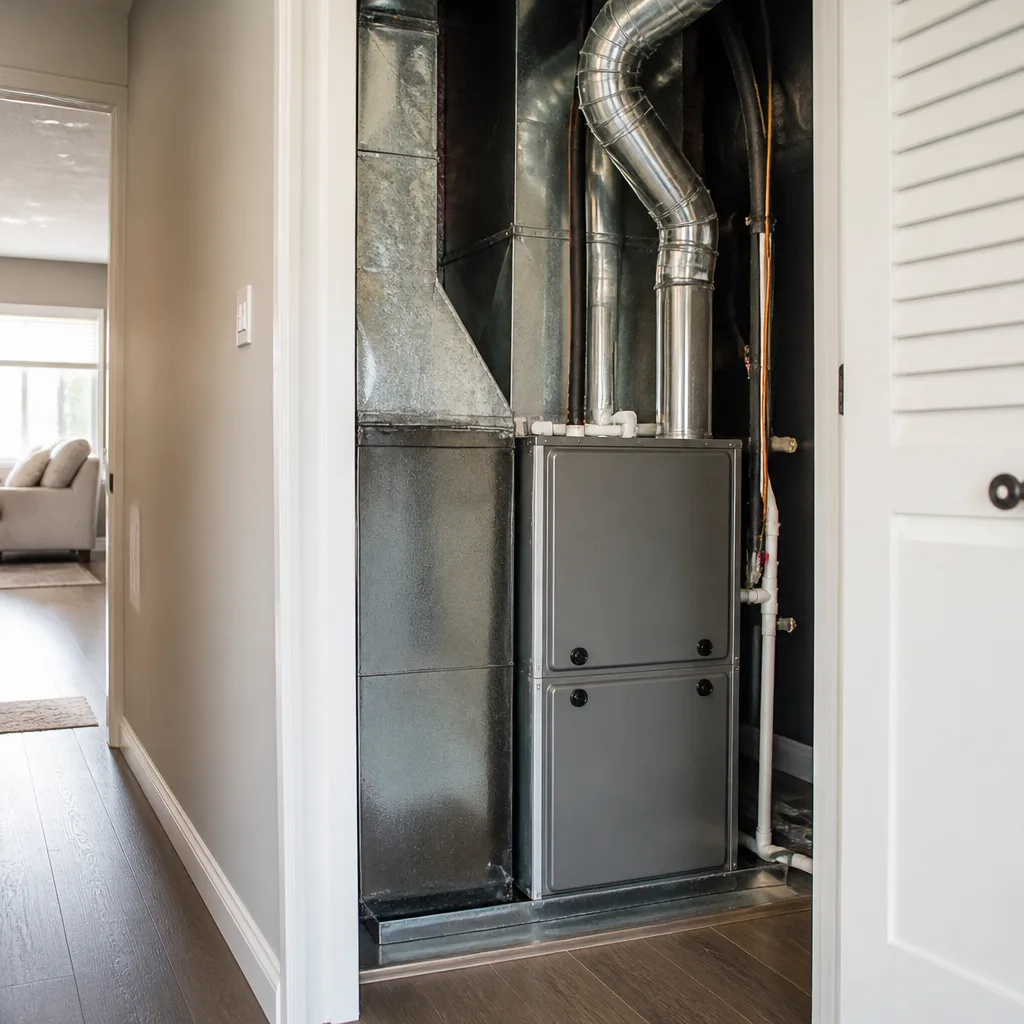 Furnace & heating
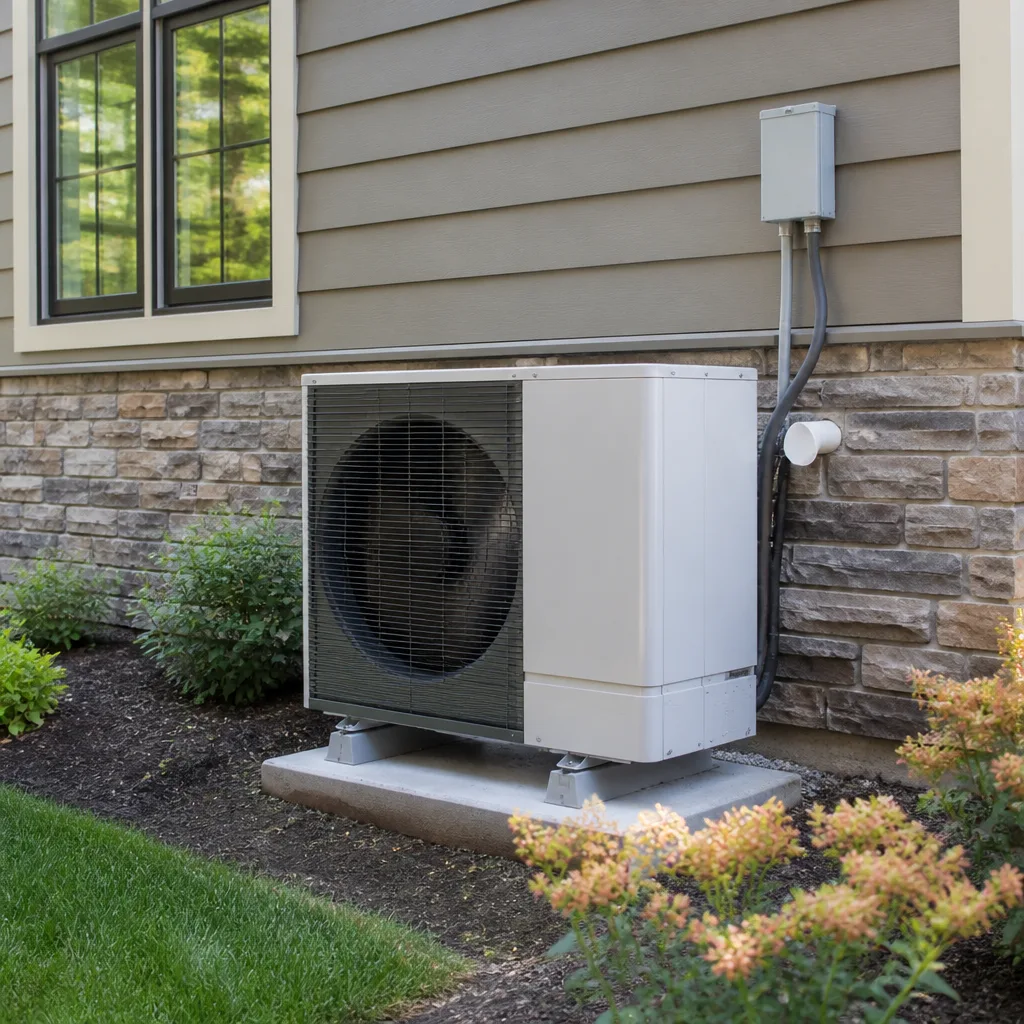 Heat pumps
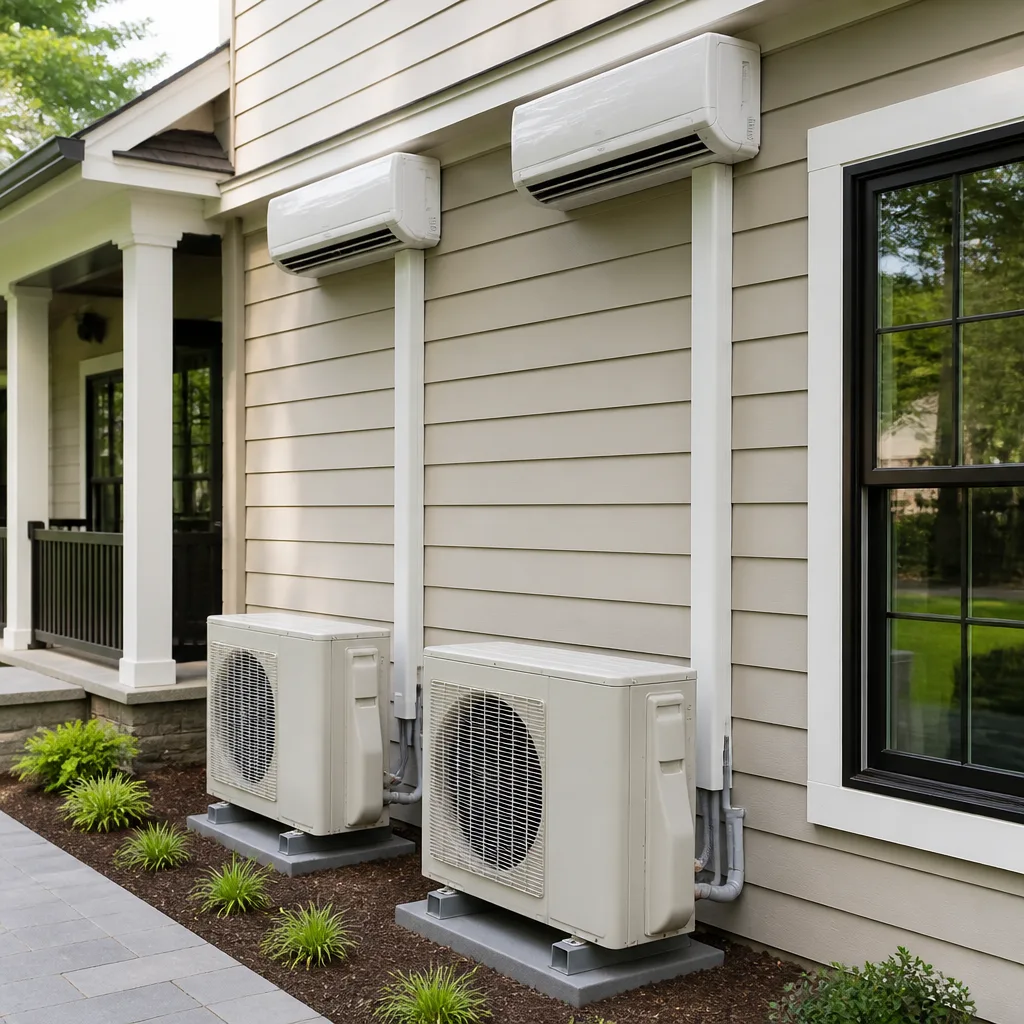 Ductless mini splits
 Carrier
 Trane
 Goodman
Seasonal tune-up and full diagnostic on your Carrier, Trane, or Goodman system - readings shown to you before any repair is proposed
Diagnosis first, numbers second - you approve the repair price before a single part goes in.
Get your free estimateHVAC Permits, Codes & Inspections in Gainesville, FL: What You Need to Know
If your HVAC was replaced without a permit and your home floods or catches fire, your homeowner’s insurance carrier has legal grounds to reduce or deny the claim. Most Gainesville homeowners assume the permit is the contractor’s paperwork problem. It isn’t. The permit record is attached to your address, and it follows the house through every future sale, appraisal and insurance claim. A missing permit can turn a covered loss into a disputed one, and it can stall a closing on a property you’re trying to sell. This guide explains which HVAC jobs in Gainesville need a permit, which don’t, how the city and county split jurisdiction, what an inspector actually checks, and how to fix unpermitted work before it becomes a real problem.
Quick Answer
In Gainesville, replacing or modifying an HVAC system requires a permit and inspection, while routine repair of an existing system generally does not. Which office issues that permit depends on your property address: the City of Gainesville handles properties inside city limits, and Alachua County handles unincorporated addresses. New installations must meet the Florida Energy Code, including Manual J load calculations and Manual S equipment selection. Unpermitted work stays on your property record and can complicate insurance claims and home sales.
Styles & brands we work with
- AC repair
- Furnace & heating
- Heat pumps
- Ductless mini splits
- Carrier
- Trane
- Goodman
Table of Contents
- Permit vs. No Permit: Which HVAC Jobs Require One in Gainesville
- City of Gainesville vs. Alachua County: Which Permit Office Applies to You
- What the Inspection Process Actually Involves
- Florida Energy Code and Manual J/S Compliance
- Replacement vs. Repair: Where the Permit Line Falls
- How to Fix Unpermitted HVAC Work Before You Sell
- Keeping Your Permit Records Straight
- Common Mistakes to Avoid
Permit vs. No Permit: Which HVAC Jobs Require One in Gainesville
Replacing a condenser, air handler, or full split system requires a permit in Gainesville. So does any modification that changes the system’s capacity, routing, or electrical draw. A repair that restores an existing system to how it was originally installed and permitted does not.
The dividing line comes down to one question: are you changing the equipment or the system as it was permitted, or are you putting the same system back into working order? Here’s how that breaks down for the jobs we see most often around Gainesville.
Jobs that require a permit
- Full system replacement (condenser and air handler together)
- Condenser-only or air-handler-only swap when the tonnage or model changes
- Adding refrigerant lines or relocating equipment
- New electrical circuits or disconnects feeding HVAC equipment
- Any change to ductwork layout or size
- Converting from one fuel type or system type to another
Jobs that typically don’t require a permit
- Replacing a failed capacitor, contactor, or blower motor with like-for-like parts
- Recharging refrigerant to fix a leak (though the leak repair itself matters)
- Cleaning coils, clearing a drain line, or replacing a filter
- Diagnostic work
A good rule of thumb: if the equipment serial number on the new unit will differ from the one on the old unit at the same location, it’s a permit job. If the same equipment stays put and just needs to work again, it usually isn’t. When in doubt, the safest path is to call the permitting office for your address and ask directly. It’s a five-minute phone call that can save you a headache at closing.
City of Gainesville vs. Alachua County: Which Permit Office Applies to You
Your property address determines which jurisdiction issues your HVAC permit. Properties inside Gainesville city limits go through the City of Gainesville’s building department. Properties in unincorporated Alachua County go through the county. Getting this wrong means your contractor pulls the wrong permit, and the inspector who shows up won’t be the one who can sign it off.
Here’s the confusing part: the mailing address is not the determining factor. A home with a Gainesville mailing address can still sit in unincorporated Alachua County, especially in areas that were annexed or developed outside the city boundary. Neighborhoods around the city’s edges, and properties on larger parcels west and north of the core, frequently fall into this gray zone.
How to confirm which office applies to you
- Look up your parcel on the Alachua County Property Appraiser’s website. The record will show whether the property sits inside city limits.
- Check your most recent property tax bill. City taxes are itemized separately from county taxes.
- Call the jurisdiction that your record points to and confirm the permit desk handles HVAC replacements for that address.
- Ask your contractor to confirm the permit number reflects the correct jurisdiction before any work starts.
This split matters more than most homeowners realize. The two offices run different systems, different inspection timelines, and different documentation requirements. A permit pulled in the wrong jurisdiction is effectively no permit at all, even if you paid for it. If you’re working with a contractor on AC installation, ask them to show you the permit number and the jurisdiction before the crew arrives.
One more local wrinkle: older properties in the neighborhoods closest to the University of Florida campus and the downtown core often have prior permit history that’s scattered across decades and multiple ownership changes. If your home has changed hands several times, the permit history may have gaps that don’t reflect anything wrong with the current system. That’s why the inspection record matters more than the paperwork trail – it’s the authoritative proof of what was inspected and signed off.
What the Inspection Process Actually Involves
An HVAC inspector verifies that the installed system matches the permitted scope, meets the energy code, and is safe to energize. A standard split system replacement in Gainesville typically requires two inspections – a rough-in inspection before the system is fully closed up, and a final inspection once the system is running.
In our experience, most homeowners don’t know the inspection even happened. The contractor schedules it, meets the inspector, and the sign-off gets filed with the permit. But if you’re the homeowner, you have a right to be there, and understanding what’s being checked helps you spot a contractor who’s cutting corners.
What the inspector is looking for on a standard split system replacement
- Permit and plans match the install. The equipment model and tonnage on the new unit should match what was submitted with the permit application.
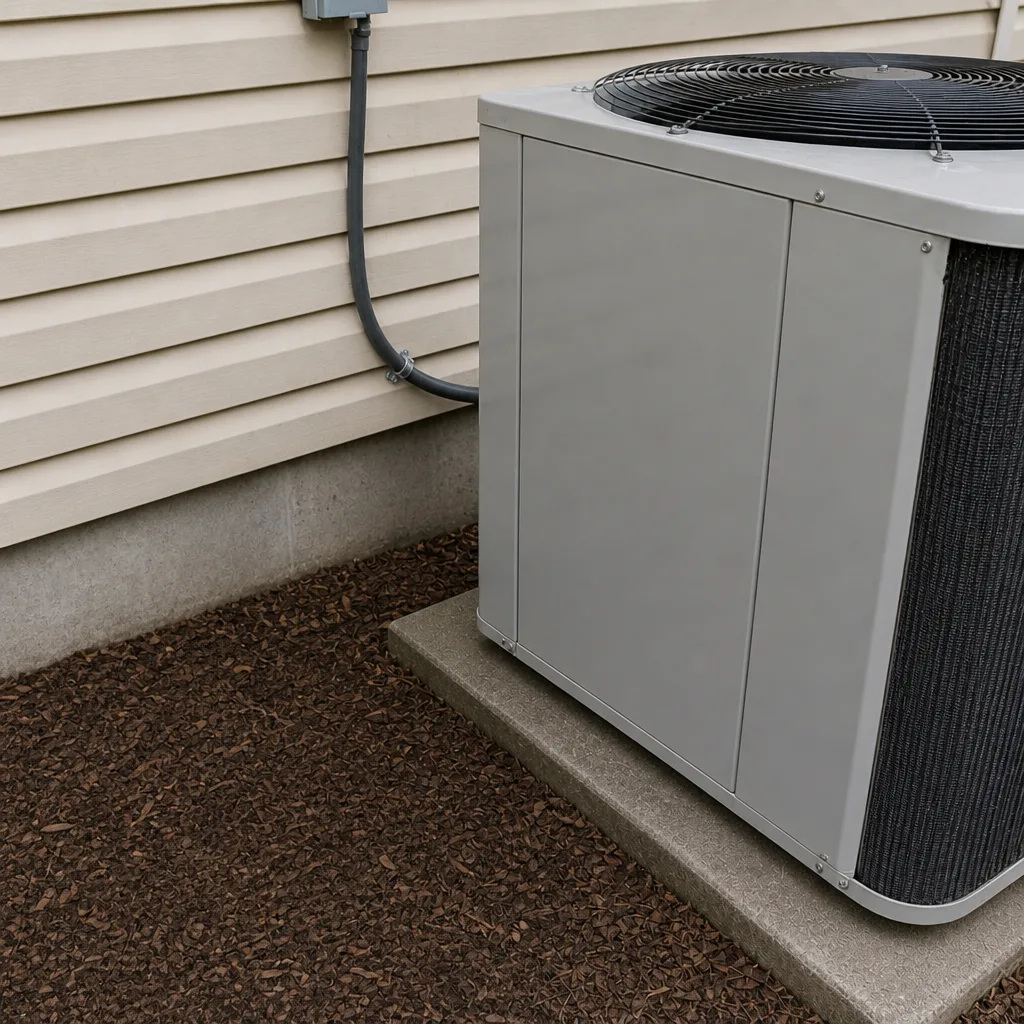
- Proper equipment placement and clearances. The condenser needs the manufacturer-specified clearance around it, and the air handler needs the service access the code requires.
- Refrigerant line sizing and insulation. Line sets need to be the right diameter for the equipment and properly insulated along the run.
- Electrical connections and disconnect. The disconnect must be at the unit, and the breaker must be sized correctly for the equipment.
- Condensate management. The drain line must be pitched correctly and routed to a legal discharge point. In Gainesville’s humid summers, a poorly routed drain is a common failure point.
- Manual J and Manual S documentation. The permit file should include the load calculation and equipment selection that justify the size and model chosen.
- Operating verification. The final inspection confirms the system runs, refrigerant charge is within spec, and the equipment is functioning as designed.
If the inspector finds deficiencies, they’ll write corrections and require a re-inspection. That’s an inconvenience, not a crisis, as long as your contractor handles it. What matters is that the correction gets made and the final sign-off gets filed. A permit that never closed is functionally as bad as one that was never pulled – and it’s the kind of thing that surfaces at the worst possible moment.
For furnace repair, the inspection requirement is often lighter because you’re often not changing equipment – but any replacement of the heat source itself still goes through the permit process. Warm winters in Gainesville mean fewer heating calls than cooling calls, but the permit rules apply the same way when equipment is swapped.
Florida Energy Code and Manual J/S Compliance
New HVAC installations in Florida must comply with the Florida Energy Code, which requires a Manual J load calculation and a Manual S equipment selection before a permit application is approved. If your system was installed out of compliance, you may not be able to close a permit or sell the home without remediation.
Here’s what that means in plain terms. Manual J is a room-by-room calculation that determines how much heating and cooling load your home actually needs. Manual S is the equipment selection that matches real equipment to that load. Together, they document that the system installed is the right size for the house – not oversized, not undersized.
Why this matters beyond the permit
- Oversized systems short-cycle. They cool the house too quickly to remove humidity, which is a real problem in Gainesville’s long humid season. The result is a cold but clammy house and higher energy use.
- Undersized systems run long. The equipment never shuts off during peak summer, wears faster, and costs more to run.
- Manual J documents the correct size. Without it, the permit file is incomplete, and the installation can’t be signed off.
- The documentation protects you at sale. A buyer’s inspector will pull the permit history. A missing Manual J can turn into a negotiating point or a repair contingency.
Older homes around Gainesville present a challenge here. Houses built decades ago often have ductwork and equipment that don’t match current load calculations, because the house itself has been renovated, added onto, or re-insulated over the years. A Manual J performed today may show that the original equipment size was never correct for the current condition of the house. When that happens, a compliant replacement means sizing properly for the house as it is now – not simply matching what was there before.
This is why the equipment choice matters. We work with brands like Lennox and Goodman, which gives us real flexibility to match the equipment to the Manual J result and to your budget rather than pushing one tier of system at every homeowner. A builder-grade system and a premium-efficiency system both need to hit the same load calculation – they just get there through different equipment selections. The AC repair Gainesville team can walk you through what a compliant install looks like on your specific home.
Replacement vs. Repair: Where the Permit Line Falls
A repair keeps the existing permitted equipment and restores it to working order. A replacement swaps equipment and always requires a permit. The decision of which path to take should be based on system age, refrigerant type, and cost – but the permit consequence should be part of that conversation.
Homeowners tend to dread the replacement conversation because it sounds expensive. But there’s an honest middle ground that gets lost when a contractor is incentivized to sell a new system. Sometimes a repair is genuinely the right call. Our technicians are not paid on what they sell, so the recommendation comes down to what the system actually needs.
Questions that clarify the repair-or-replace decision
- How old is the equipment? Systems well into their second decade are more likely to be on borrowed time.
- What refrigerant does it use? Older refrigerants being phased out can make future repairs harder and more expensive.
- How frequent are the repairs? One repair is different from a pattern.
- Did the current system ever pass inspection? If the system was installed unpermitted, replacing it is a chance to correct the record – which is a real benefit that shouldn’t be ignored.
- Does the current system meet Manual J for the house as it is now? If the house has changed since the system was installed, replacing it is the moment to size it correctly.
An honest contractor will run through these questions with you, not around you. We handle both AC installation and repair, and we work on Lennox, Goodman, Rheem, York, and several other major brands, so we don’t have a reason to steer you toward replacement because we can’t service what you have. Multi-brand work means fewer dead ends and more room for an honest answer.
How to Fix Unpermitted HVAC Work Before You Sell
Unpermitted HVAC work can usually be corrected retroactively, but the process involves a permit application, an inspection, and sometimes correction work. In Gainesville’s market, the cost of retroactive permitting is typically modest compared to the negotiating leverage it gives back to a seller.
Here’s how it typically plays out. A buyer’s inspector flags an HVAC equipment swap that shows no permit in the county or city records. The buyer’s agent asks for proof, the seller can’t produce it, and the deal either stalls or the buyer asks for a credit against the sale price. Sometimes the credit is larger than the cost of getting the permit done properly – which is where the math gets frustrating for a seller.
The realistic correction process
- Pull the permit history on the property. This confirms what’s on record and where the gaps are.
- Get an assessment of the current system. A technician verifies the equipment installed, the condition, and whether it meets code as installed. If it doesn’t, corrections get scoped and priced.
- Apply for a retroactive permit. The permitting jurisdiction reviews the application and typically requires documentation of the installation, including load calculations if a full system was replaced.
- Schedule and pass inspection. The inspector confirms the system as installed is code-compliant. If corrections are needed, they’re made before the final sign-off.
- Get the final inspection record filed. Once signed off, the permit is closed and available to any future buyer’s title company.
Timing matters. If you’re within a few weeks of closing, the process can add stress and pressure. The better move is to handle it before the house goes on the market, when there’s no clock ticking. Sellers in Gainesville who handle permit gaps proactively usually do so at a fraction of the cost that a last-minute buyer credit would represent.
If you’re not selling but you’ve just discovered unpermitted work on your own home, the same process applies. The insurance claim risk isn’t hypothetical – carriers reviewing a claim after a fire or water event do look at permit records, and unpermitted installations can complicate coverage. Fixing the record is the way to make sure you don’t find that out the hard way.
Keeping Your Permit Records Straight
A closed permit is a permanent record of compliance. Keep the final inspection sign-off and the permit number with your home records, alongside your property tax documents and your insurance policy. It’s the single document that answers “was this installed legally” for every future owner, insurer, and appraiser.
Homeowners who have a clean permit file tend to have an easier path on three things:
- Insurance claims. When a claim involves HVAC equipment, the carrier can verify the installation was permitted and inspected.
- Home sales. A buyer’s inspector will pull permit history, and having a clean file removes a common contingency point.
- Future service. Knowing what was installed, when, and to what code makes the next service call more efficient. Our technicians have up to 15 years of experience and can usually spot a mismatched system quickly, but the paperwork answers questions faster than any diagnostic.
If you don’t know what’s on your property’s permit record, a quick lookup at the City of Gainesville or Alachua County permitting office will tell you. For a homeowner new to Gainesville, it’s often one of the first things worth checking after closing, right alongside the roof age and the electrical panel – the three systems most likely to have unpermitted history.
Common Mistakes to Avoid
- Assuming the permit is the contractor’s responsibility alone. The contractor pulls it, but the record belongs to your property. If they skip the permit and disappear, the liability stays with the house. Verify the permit number before work starts.
- Trusting a mailing address to determine jurisdiction. A Gainesville mailing address doesn’t always mean the property is inside city limits. Check the Property Appraiser record before assuming which office handles your permit.
- Accepting a verbal “it’s permitted” without documentation. Ask to see the permit number and the jurisdiction. It’s a reasonable request and any legitimate contractor will provide it without hesitation.
- Skipping Manual J on a replacement. Matching the old equipment size is not the same as sizing the system correctly for the house as it is now. A replacement without a load calculation can fail inspection or leave you with a system that doesn’t perform.
- Letting the buyer’s inspector be the first person to notice. By the time a buyer discovers unpermitted work, you have no negotiating room. Handle it before the listing goes live.
- Treating a failed inspection as a dead end. Corrections are usually fixable. What you can’t fix easily is a permit that was never pulled and never closed – which is why pulling the right permit at the start matters more than any single inspection outcome.
- Forgetting to keep the final sign-off. A closed permit is only useful if you can produce the record. Keep a copy with your home documents.
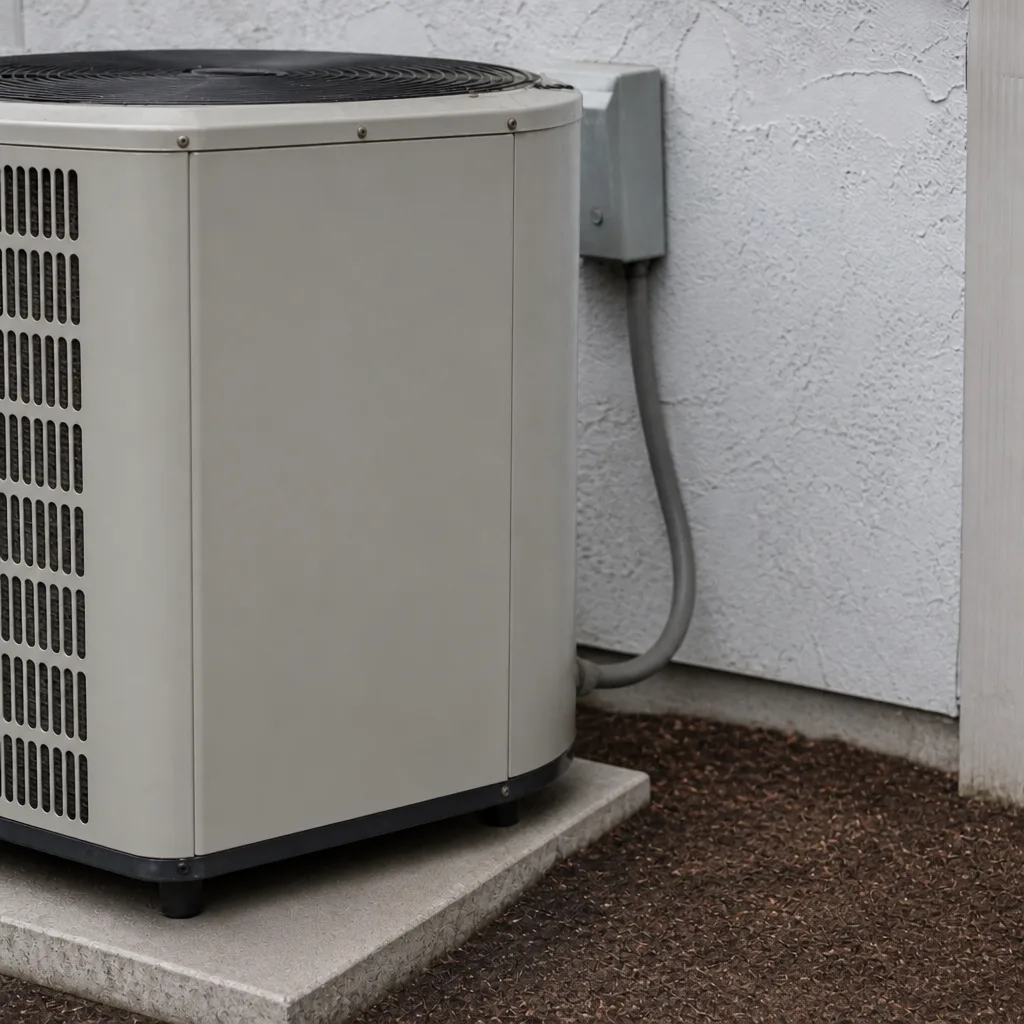
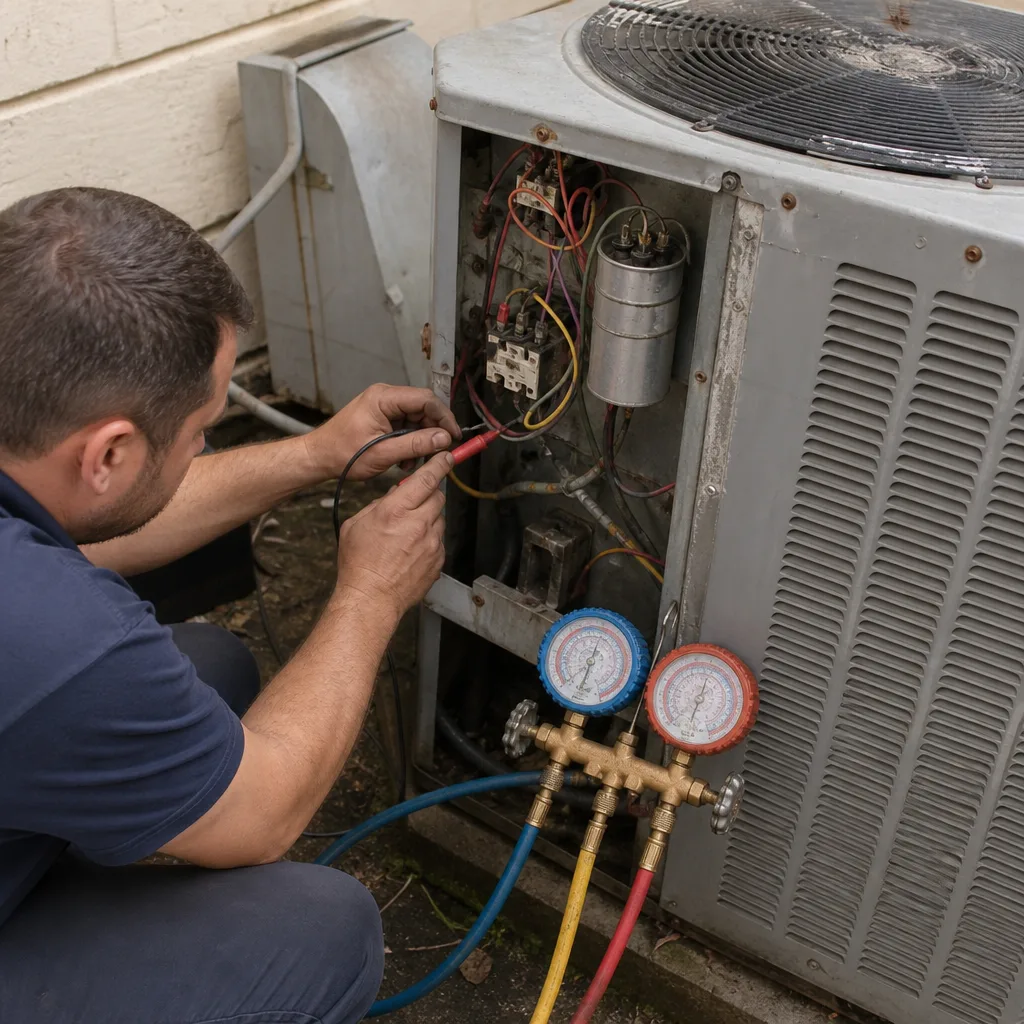
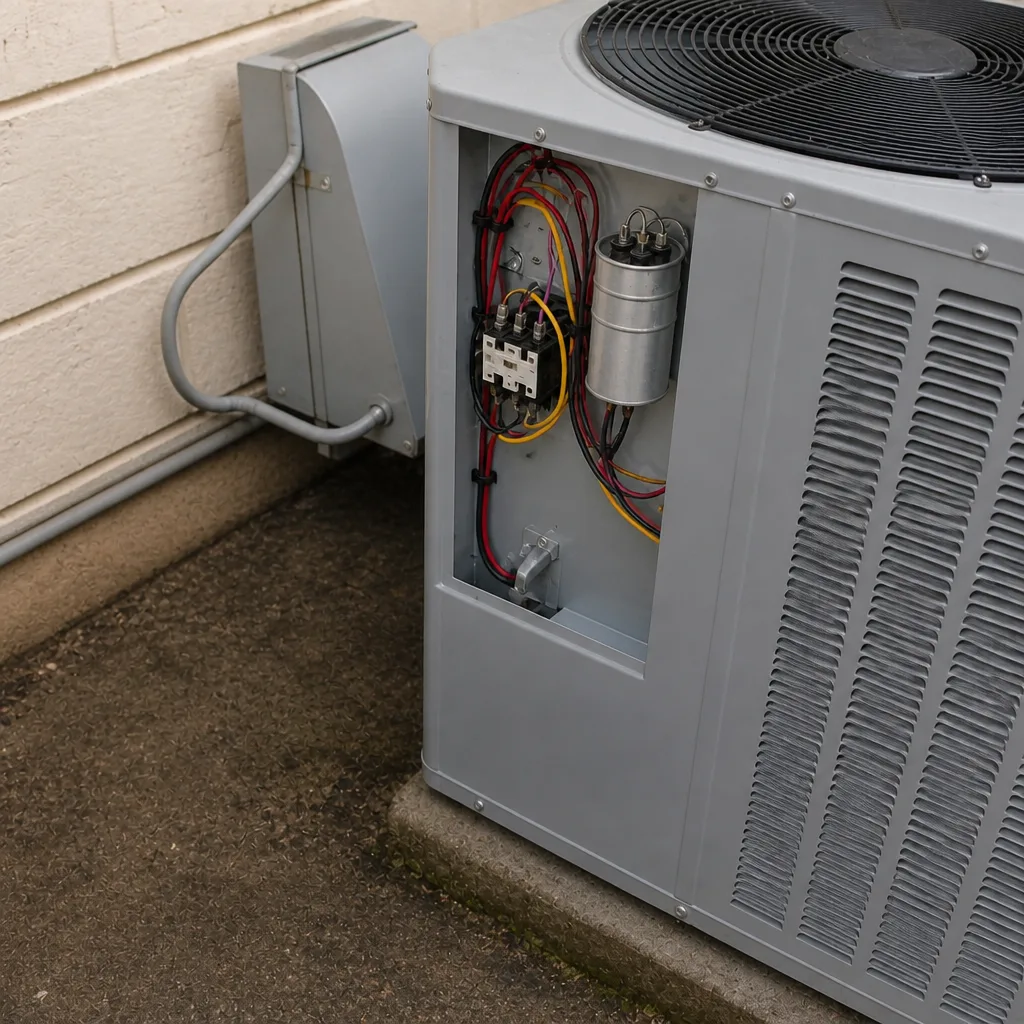
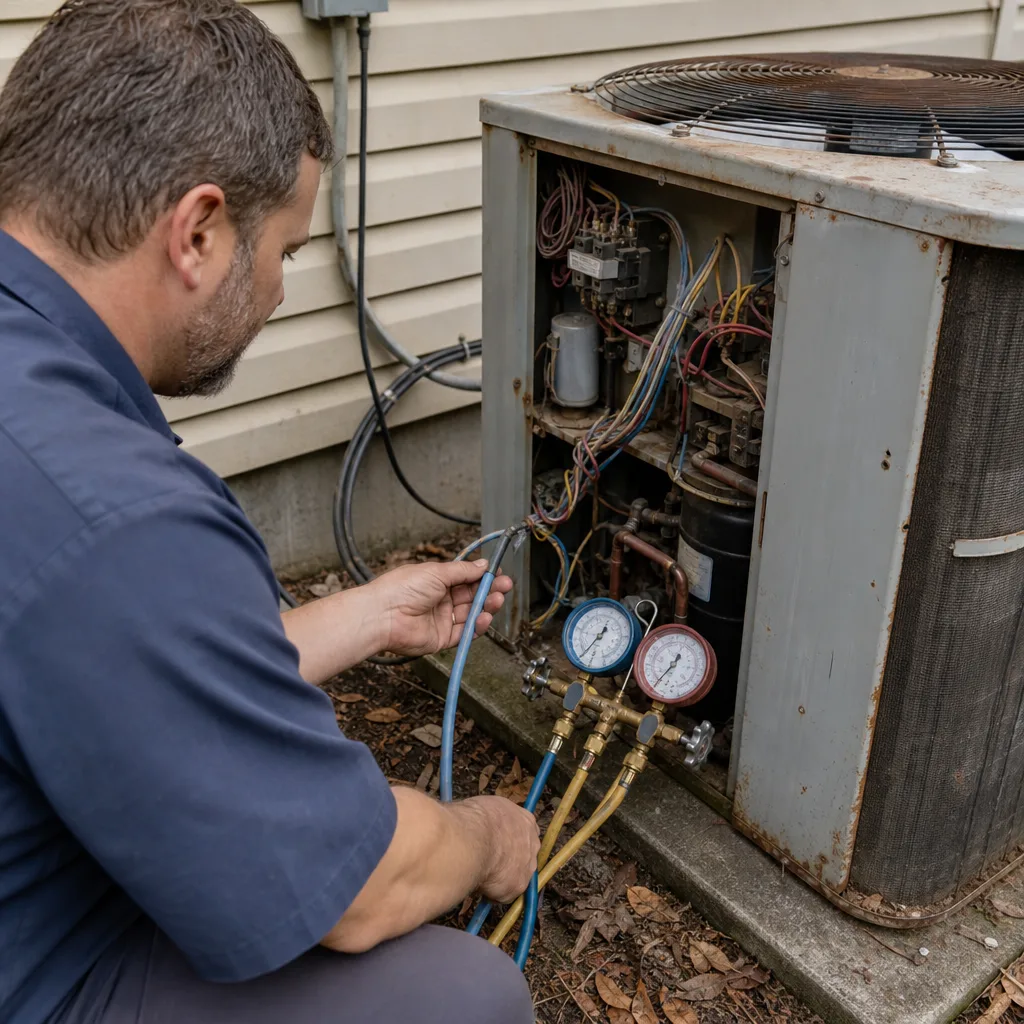
See the difference
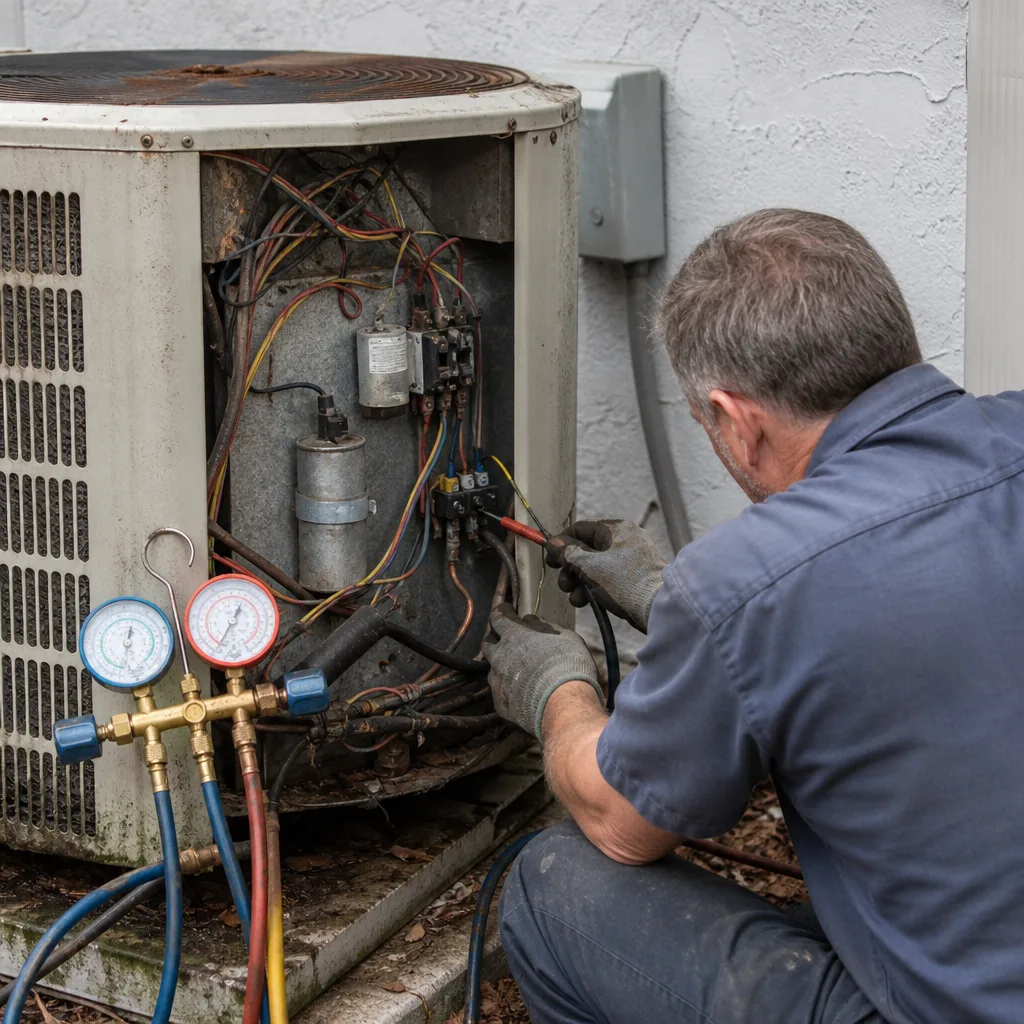 Before
 After
 Before
 After
 Before
 After
When to Call a Professional
Call a licensed HVAC contractor when you’re replacing equipment, changing system type, or facing a replacement vs. repair decision with permit consequences. Also call when you’ve discovered unpermitted work in your home’s history, especially if you’re considering selling within the next year. A licensed technician can verify the current system, walk you through what’s on record, and help you understand whether the installation meets code. Our team at AC Repair Gainesville handles both heating and cooling, works with equipment from major manufacturers including Lennox, Goodman, Rheem, and York, and offers free estimates in Gainesville. Call (844) 223-9427 to get started.
Frequently Asked Questions
Yes. Replacing an AC system, condenser, or air handler in Gainesville requires a permit from either the City of Gainesville or Alachua County, depending on your property address. The permit application includes a Manual J load calculation and Manual S equipment selection, and the installation is inspected before the permit closes. Call (844) 223-9427 for an exact quote on your replacement – estimates are free.
Generally no. Repairs that restore an existing system to working order without changing the equipment typically don’t require a permit. If the repair involves replacing the condenser, air handler, or significant electrical or refrigerant line work, the project crosses into permit territory. Call (844) 223-9427 and we’ll tell you whether your specific job needs one.
Look up the parcel on the Alachua County Property Appraiser’s website – the record shows whether the property sits inside city limits. Your property tax bill is a backup check, since city and county taxes are itemized separately. If you’re unsure, call the permitting office for the address and confirm before your contractor applies.
Unpermitted HVAC work creates a liability that follows the property and can complicate insurance claims or a future sale. The fix is a retroactive permit application, an inspection, and any correction work needed to bring the installation to code. In our experience, handling it before a sale is significantly easier than dealing with it during one.
Manual J is a room-by-room load calculation that determines how much heating and cooling your home actually needs. It’s required for new HVAC installations under the Florida Energy Code and is part of the permit documentation. Without it, the installation can’t be inspected or signed off. Call (844) 223-9427 if you need help understanding what your home’s load calculation should look like.
Yes – a failed system is a health concern, and we don’t wait on paperwork to get you cooled. We answer 24/7. Fast dispatch from 7am to 7pm, Sunday through Friday. We can assess the system, tell you whether the failure is a repair or a replacement, and sort out the permit path as part of the job.
The Bottom Line
The permit on your HVAC system is a record attached to your address, not to the contractor who pulled it. That distinction matters more than most Gainesville homeowners realize – it’s the difference between a clean insurance claim and a disputed one, and between a smooth home sale and a stalled closing. Know which jurisdiction applies to your property, understand that replacements need permits and repairs generally don’t, and verify that the installation meets the Florida Energy Code with a proper Manual J. If you’ve discovered unpermitted work, deal with it before it’s forced on you. Call (844) 223-9427 for a free estimate and a straight answer on your system. We answer 24/7. Fast dispatch from 7am to 7pm, Sunday through Friday.
Written by the team at AC Repair Gainesville.